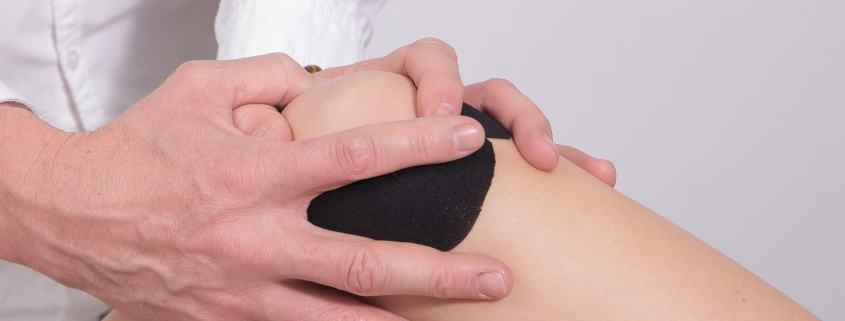
Iliotibial Band Syndrome is one of the most common overuse injuries for runners. The IT band is a ligament that runs down the outside of the thigh, from the hip to the shin, helping to stabilize and mobilize the knee joint. If it becomes too tight or inflamed it can cause friction on the knee and discomfort. The condition can cause pain while moving the knee that become so severe it can sieline a runner for weeks or even months.
The main symptoms of IT band syndrome are:
- Pain in the knee area, usually specific to the area on the outside of the knee joint; this is where the IT band will be rubbing and causing friction when the joint moves during running.
- Tenderness of the area on the outside of the knee joint.
- Tightness or a feeling of reduced flexibility in the thigh, hip or knee.
- Pain while cycling. The motion of cycling can cause the IT band to become inflamed and painful as well.
Some contributing factors to IT band syndrome are:
- An imbalance in the hip and thigh muscles. If the muscles that surround and support the hip structure and the Iliotibial band are weak or imbalanced, the IT band can become tight.
- Increasing run distance or speed too quickly. A training schedule that is too aggressive with increases can place significant stress on joints, muscles and connective tissue.
- Running on uneven or hard surfaces. Surfaces that are “banked” or consistently uneven can cause the angles of the joints to increase, causing excess stress on placement of the foot, knee and hip.
- Footwear that is unsupportive or improperly fitted can contribute to biomechanical issues that can cause IT band syndrome.
Treatment and Prevention
Treatment of an acute flare up of IT band syndrome, and understanding how to prevent it, is important for recovery and to ensure that the runner can make a full recovery. IF IT band issues are left untreated, they can progress from being a concern only while running to being experienced in day to day activities such as walking and sitting.
Treatment options for Iliotibial Band Syndrome include:
- Rest. Immediately reduce the mileage that you are running (or cycling). In many cases, completely stopping all running for a period of a few days or weeks may be necessary.
- Massage. Either self massage with a foam roller or external massage by a Registered Massage Therapist or Physiotherapist can help to encourage the tight IT band to release.
- Foam rollers are used by lying on your side with the foam roller positioned under your thigh (your thigh will be resting on top of the roller), perpendicular to your leg. Make sure the roller is a few inches below the top of your thigh area; using your arms as support, slowly roll your body forward, allowing the roller to move down your thigh. This may be quite uncomfortable at first as the IT band is tight. Move slowly, taking care to ensure proper form.
- Stretching. Make sure that proper and adequate stretching for the hip, thigh and low back muscles is a part of your running routine can help alleviate, and prevent, IT band syndrome.
- Have your running gait (biomechanics) assessed. A therapist will be able to assess your gait and help you correct any imbalances in technique or muscle strength and / or weakness. A foot analysis to see if orthotics would help can also be done.
- Warm up. Warming up before running can help the muscles and connective tissues to be less tight and prone to injury.
With some care and attention, the Iliotibial Band can recover fully from an acute flare up of inflammation or tightness. Seek out therapeutic guidance if it does not resolve itself with these tips or if it is an ongoing concern for your lifestyle.