Injury Recovery in Greater Victoria, BC - Call us to book an appointment: (250) 382-0018
Diversified Health Clinic
  • Welcome
  • About
    • Meet our Team
      • Dr. Matthew Bryan DC
      • Dr. Tessa Bryan DC
      • Dr. Krisjan Gustavson DC
      • Dr. Alexia Grelson DC
      • Dr. Ian Hyams MD
      • Dr. Jennifer Blum MD
      • Kanu Priya MPT
      • Ivy Elling-Quaintance MPT
      • Spirit Donahue MPT
      • Morag Hart RMT
      • Craig Lawrence RMT
      • McKenzie Connell RMT
      • Braedan Pearce RMT
      • Angelina Schaaf BCAK
      • Christian Schwarz BCAK
      • Annie Wang R.Ac R.TCM.P
      • Rebecca Thompson R.Ac R.TCM.P
      • Lauren Ching R.Ac
      • Jun Liu R.Ac
      • Laura Grohovac CCC
    • Our Clinic
    • Careers
  • Disciplines
    • Disciplines
      • Chiropractic
      • Physiotherapy
      • Registered Massage Therapy
      • Kinesiology
      • Acupuncture
      • Clinical Counselling
      • Medical Doctor
      • Personal Training
    • Treatments
      • Spinal Decompression
      • Shockwave
      • Class IV K Laser
      • eToims Needle-less IMS
      • Orthotics
      • Pelvic Floor Physiotherapy
      • EMSELLA
  • Conditions
    • Plantar Fasciitis
    • Running Injuries
    • Allergies
    • Concussion Treatment
    • Bursitis
    • Tennis Elbow
    • TMJ Disorder
    • Automobile Collisions
    • Nerve Pain with Sciatica
    • Sport Injuries
    • Stress
    • Runner’s Knee
    • Vertigo & Vestibular Rehab
    • Concussions
  • Pricing
  • News & Events
    • News
    • Events
    • Practitioners In Focus
    • Exercise Library
  • Contact
  • ICBC Claims
  • Book Now!
  • News
  • Menu Menu
  • Link to Facebook
  • Link to Instagram
  • Link to X
  • Link to Youtube
  • Link to Rss this site
  • Link to Mail
  • Welcome
  • About
    • Meet our Team
    • Our Clinic
    • Careers
  • Disciplines
  • Conditions
  • Pricing
  • News
    • News & Advice
    • Practitioners In Focus
  • Contact
  • ICBC Claims
  • Book Now!

Tag Archive for: Foot pain

Chiropractic Care, Health Information, Orthotics

Foot Pain? Your Flip-Flops May Be the Culprit!

Foot Pain? Your Flip-Flops May Be the Culprit!

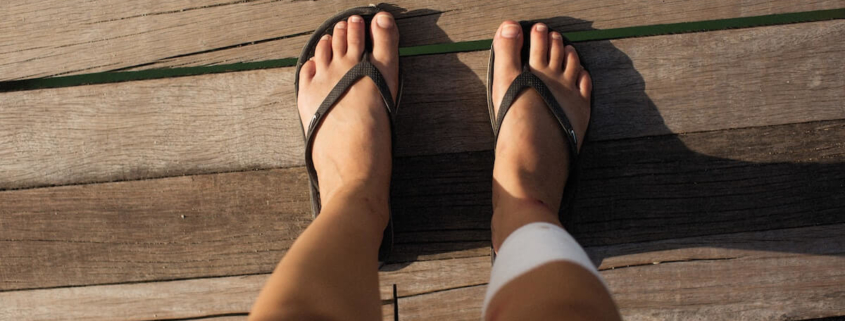
Ah, summertime splendour. Nearly everyone’s favourite time of year in Victoria is met by longer days, lighter clothing and more casual footwear — namely, the all-too-common flip-flops. Unfortunately, while flip-flops may seem like a comfortable choice at first step, they can cause foot pain and exacerbate the following conditions. So, if you’re noticing aches and pains this time of year, and if flip-flops are part of your summertime routine, here’s what you need to know.

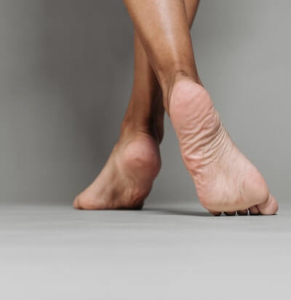
Why Flip-Flops Cause Foot Pain and ProblemsFoot Pain Caused By Poor-Fitting Foorwear
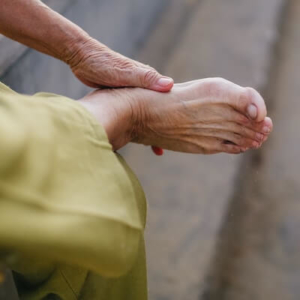
Flip-flops lack support: and even if you don’t realize it, wearing flip-flops creates tension in the muscles of your feet and toes as the foot grips the flip-flop to prevent it from sliding off when walking. 

Absent elevation: In addition, the lack of a slight heel elevation can cause excessive strain on your foot, calf muscles, and Achilles tendon. While, depending on your feet, not everyone requires a lot of support in their footwear, flip-flops’ complete lack of arch support and cushioning means your whole body absorbs the shock each time your feet strike the ground. 

Standing and walking for long periods in flip-flops can cause or exacerbate underlying foot and postural conditions and cause pain that can interfere with your usual activities. 

The Most Common Conditions Exacerbated by Flip-Flop Wearing

Plantar Fasciitis: Quite possibly the most common condition triggered by prolonged flip flop wearing, plantar fasciitis pain is often described as a burning or stabbing pain that’s felt in the heel or midsole of your foot. Plantar fasciitis pain results from inflammation of the plantar fascia, which can be caused by footwear lacking adequate arch support.

Flexor and Extensor Tendonitis: When you walk in flip-flops, your feet tense the muscles of your toes to stabilize the sole of the flip-flop. In addition, it’s also common to push off the ground from your big toe when walking in flip-flops. Over time, this can lead to strain and inflammation of the tendons responsible for flexing and extending your toes. The first signs and symptoms of flexor tendonitis and extensor tendonitis include pain along the top of the foot, under the big toe, or under your inner ankle when you walk, run, bend or straighten your toes. 

Bunion Pain: If you have bunions, you know they can make a lot of different footwear off limits. And while flip flops appear as though they’d offer a reprieve from bunion pain caused by friction from narrow and enclosed footwear, the lack of cushioning under the big toe joint and ball of your foot can lead to inflammation, redness and pain. 

Achilles Tendonitis Pain: Achilles tendonitis is caused when the tendon that runs between the back of your ankle and heel becomes strained, which can be triggered by wearing flat footwear without a slight heel elevation.

Knee, Hip or Lower Back Pain: Footwear that lacks adequate cushioning and support places unnecessary strain and impact on your ligaments and joints, which can cause inflammation and pain most commonly felt in the knees, hips and lower back. 

Gait Issues, Postural Issues and Muscle Imbalances: Gait issues are prevalent and often go unnoticed until body aches and pains (or a sports injury) bring someone in for an assessment. Unaddressed gait issues can lead to muscle imbalances such as glute tightness that can cause an uneven tilt to the pelvis resulting in lower back and hip pain, nerve pain and joint issues. In addition, flat footwear such as flip-flops can interfere with the natural biomechanics of your feet, which, when unimpeded, help protect the body by absorbing shock, ensuring balance and maintaining body alignment.

Perhaps You Could Use a Little Support

Proper body alignment starts from the ground up: and sometimes something as minor as adjusting heel elevation and providing adequate arch support can make a big difference in helping to improve posture, relieve pain and correct movement patterns. 

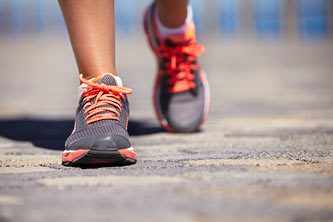
You don’t necessarily have to ditch your flip-flops altogether: reserve them for beach or short strolls in the yard. Even your most expensive running shoes or workboots may need a little tweaking to best support your feet and prevent foot pain and other complications. 

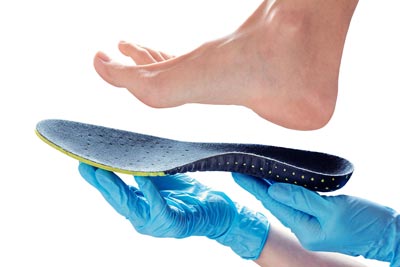
Custom orthotics that are tailored to your specific needs following a thorough GAIT analysis: can be easily inserted into different types of footwear. Adding orthotics to your everyday shoes and boots can help alleviate foot pain and correct gait issues by giving your feet the right amount of support where it’s needed. Custom orthotics can make a big difference in relieving foot pain and body aches caused by gait issues and suboptimal body alignment, resulting in more comfortable days on your feet.

If Foot Pain Persists
How Orthotics are Made

It never hurts to have things checked out by a health professional, and addressing the cause of foot pain early can prevent further injury and result in better overall outcomes.

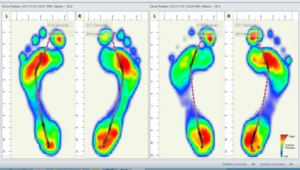
At Diversified Health Clinic, we use state-of-the-art GaitScan technology to accurately assess foot function and identify any imbalances, biomechanical issues and causes of pain. If faulty foot mechanics are found to be the cause of your pain, our practitioners can fit you with custom orthotic inserts that are specifically tailored for your feet. You can learn more about our comprehensive process here.

Take The Next Step Towards Happy, Healthy Feet

If foot pain, body aches or gait issues are slowing you down, our practitioners at Diversified Health can help. Take the first step on your road to recovery by booking an appointment with one of our practitioners today.

Call (250) 382-0018 or book an appointment online. We offer direct billing and weekday and weekend appointments. Please view our hours of operation and location details here.
July 29, 2022/by Diversified Health Clinic
https://www.diversifiedhealth.ca/wp-content/uploads/2022/08/DHC-Foot-Pain-Caused-By-Flip-Flops-RF-Pex-1200x630-CX.jpg 630 1200 Diversified Health Clinic https://www.diversifiedhealth.ca/wp-content/uploads/2026/01/DiversifiedHealth-logo.png Diversified Health Clinic2022-07-29 07:00:132022-08-08 08:08:29Foot Pain? Your Flip-Flops May Be the Culprit!
Chiropractic Care, Health Information, Orthotics, Physiotherapy

Step Into The New Year With Less Foot Pain

Step Into The New Year With Less Foot Pain

Life is too short for uncomfortable shoes, but even the cushiest shoes can feel like bricks at the end of a long day on your feet (especially if you’re already prone to foot pain). While you can’t always put your feet up when you want to, the good news is that there are things you can do to prevent and alleviate foot pain. Continue reading to learn about the most common causes of foot pain and what can be done to treat your feet. 

Common Causes of Foot Pain 

Everyone will experience sore feet at some point, but what happens when foot pain is recurring or, worse yet, persistent? Recurring or constant foot pain often comes down to one or more of the following:

  • Poor-fitting or uncomfortable footwear
  • Wearing inappropriate footwear for an activity 
  • Strained foot muscles caused by occupation, prolonged activity, or excessive body weight
  • Untreated gait issues resulting in excessive supination (rolling outward of the ankles and raising of the arch), pronation (rolling inwards of the ankles and collapsing of the arches) and other biomechanical faults
  • Hereditary conditions, including rheumatoid arthritis that affect the bones and joints of your feet and ankles 
  • Arch pain from fallen arches and poor arch support 
  • Heel spurs, hammertoes and bunions 
  • Past injuries to your feet, ankles, knees or hips that displace more weight to one foot, reducing foot flexibility or causing pain during certain activities
  • Heel pain caused by plantar fasciitis and Achilles tendon pain caused by Achilles tendinopathy
  • Metatarsalgia, causing pain and inflammation in the bottom balls of (one or both) feet, triggered by poor arch support or shock absorption
  • Shin splints pain caused by training on hard surfaces and footwear with poor shock absorption
  • Gait issues that negatively affect your body’s alignment and posture, resulting in knee, hip or lower back pain

Choosing the Right Shoes

Foot Pain Caused By Poor-Fitting Foorwear

In our efforts to be fashionable, we often make footwear choices based on form over function by paying more attention to a style than whether or not our footwear choices properly support our feet. Common blunders include toe boxes that are too tight, heels that are too high or soles that are too flat, resulting in constrained feet and overtaxed foot muscles after a few hours of wear. The ideal footwear considers the activity you’re performing and supports your feet by helping to distribute your weight as evenly as possible and absorbing some of the shock when your feet strike the ground. 

Proper Footwear for Your Occupation and Sport

If your occupation has you on your feet all day, your footwear needs to be more shock-absorbing and offer good stability and arch support to prevent muscle strain and inflammation. 

Selecting the proper footwear for your sport is just as important (if not more) as choosing the rest of your equipment. For example, a good weightlifting shoe will offer drastically different types of support than the ideal shoe for hiking, trail running, CrossFit or field lacrosse. So carefully consider what kind of support your feet and ankles need during the activities you perform. 

Some Feet Need a Little Extra Support

Some feet require extra TLC, and that’s okay! When we consider how much our feet support us every day, it only makes sense to return the favour. 

Some Feet Need a Little Extra Support

Did you know? 

Besides causing pain, improper footwear and unaddressed gait issues can have a detrimental and compounding effect on the rest of your body. For example, Shin pain, knee pain, hip joint pain and lower back pain are sometimes caused and exacerbated by issues that start in your feet. 

Protecting your health from the ground up!

If we compare our bodies to a tower, the strength of a tower’s architecture significantly depends on a solid foundation. The same is true about our bodies. The optimal alignment of our joints (and posture) starts at our feet – our foundation. This is where custom orthotics come in.

How custom orthotics mitigate foot pain

Most foot pain is caused by biomechanical faults of the feet that can be corrected using custom-made orthotics. Even foot pain caused by genetic factors can benefit from having custom orthotics that help reduce foot strain. Custom orthotics are tailored to the exact ergonomics of your foot, taking into account any pain and biomechanical faults caused by foot malformations, fallen arches and other foot muscle imbalances. Properly fitted orthotics improve how your body’s weight is distributed to your feet, improving overall body alignment and shock absorption while standing and during activities.

Custom orthotics add an instant upgrade to almost any pair of shoes

Custom orthotics are made to fit neatly into most types of footwear, and depending on your lifestyle, can be tailored to suit the activities you partake in most. For example, it’s not uncommon for athletes to have more than one pair of custom orthotics – one that is specifically designed to be used during training. 

Custom-made orthotics support your feet where they need it most

Custom Orthotics and Gait AnalysisUnlike off-the-shelf insoles and inserts, custom orthotics are created from exact molds of your feet that are taken after a thorough biomechanical assessment and Gait Analysis that examines your feet and posture when standing and walking. Making orthotics from an exact mold ensures the correction offered by your orthotics is just enough, providing support specifically where your feet need it without interfering with the healthy dynamics of your feet.
Click here to learn more about our Gait Scan Analysis or visit our article on Custom Foot Orthotics to learn more about our Custom Orthotics process at Diversified Health Clinic in Victoria, BC.

Take the Next Step in Treating Foot Pain

Book a private appointment with one of our chiropractors or physiotherapists at Diversified Health Clinic today at (250) 382-0018 to discuss whether orthotics are right for you, or contact our clinic to learn more.

We’re happy to answer your questions, address the cause of your pain and discomfort, and help you step into the new year with happy, healthy feet!

November 30, 2021/by Diversified Health Clinic
https://www.diversifiedhealth.ca/wp-content/uploads/2021/12/DHC-Step-Into-NY-With-Less-Foot-Pain-1-RF-Pex1200x630-CX.jpg 630 1200 Diversified Health Clinic https://www.diversifiedhealth.ca/wp-content/uploads/2026/01/DiversifiedHealth-logo.png Diversified Health Clinic2021-11-30 08:00:322021-12-09 05:44:57Step Into The New Year With Less Foot Pain
Physiotherapy

Plantar Fasciitis: What It Is and How It’s Treated

What Plantar Fasciitis Is and How to Treat It

Ouch! Have you been experiencing a shooting or stabbing pain in one or both heels upon stepping out of bed or after long periods of sitting? You may be suffering from plantar fasciitis. Plantar fasciitis is the most common cause of heel pain and, if left untreated, often becomes much worse. 

What Plantar Fasciitis Is

What Plantar Fasciitis Is

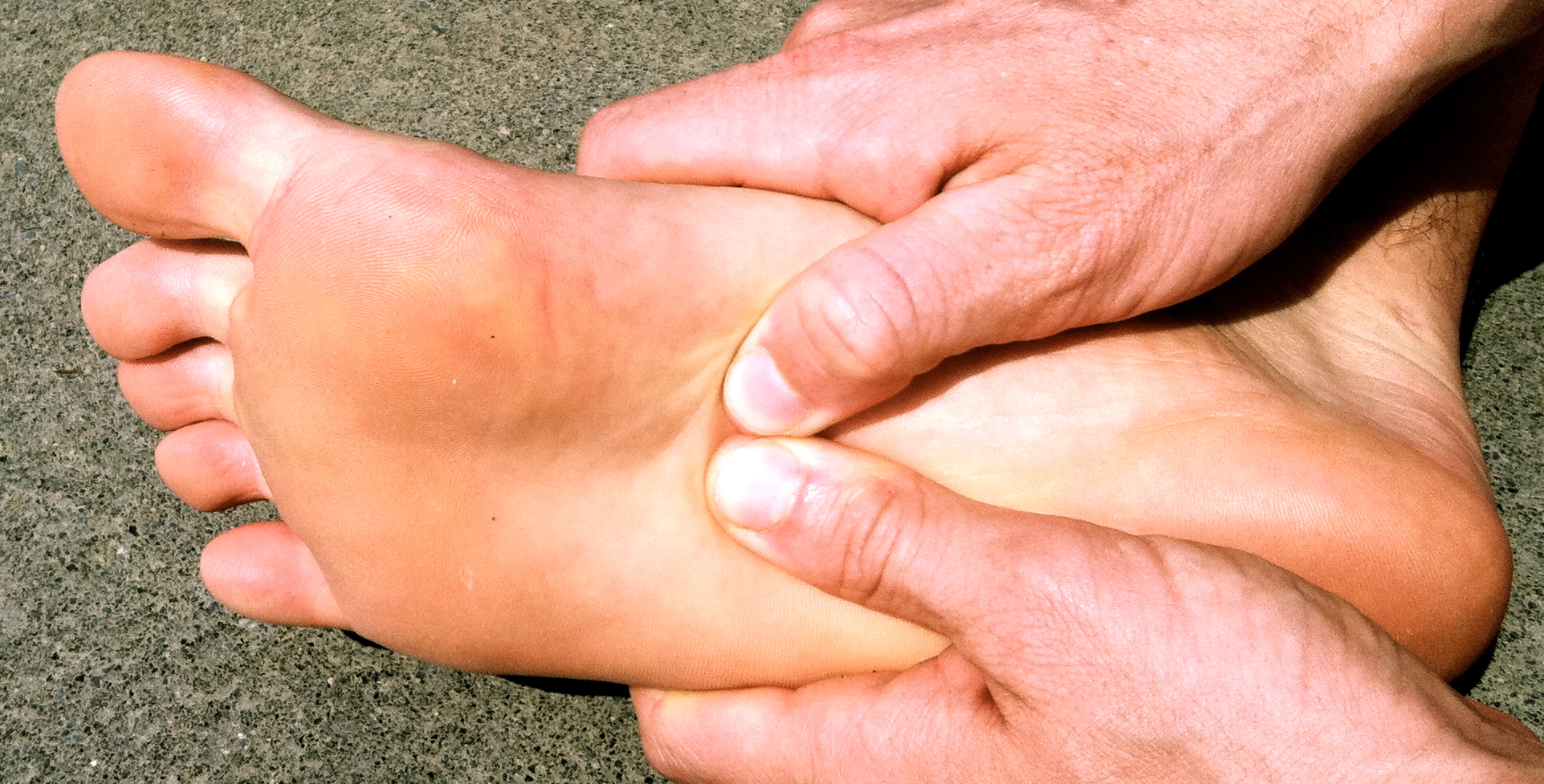
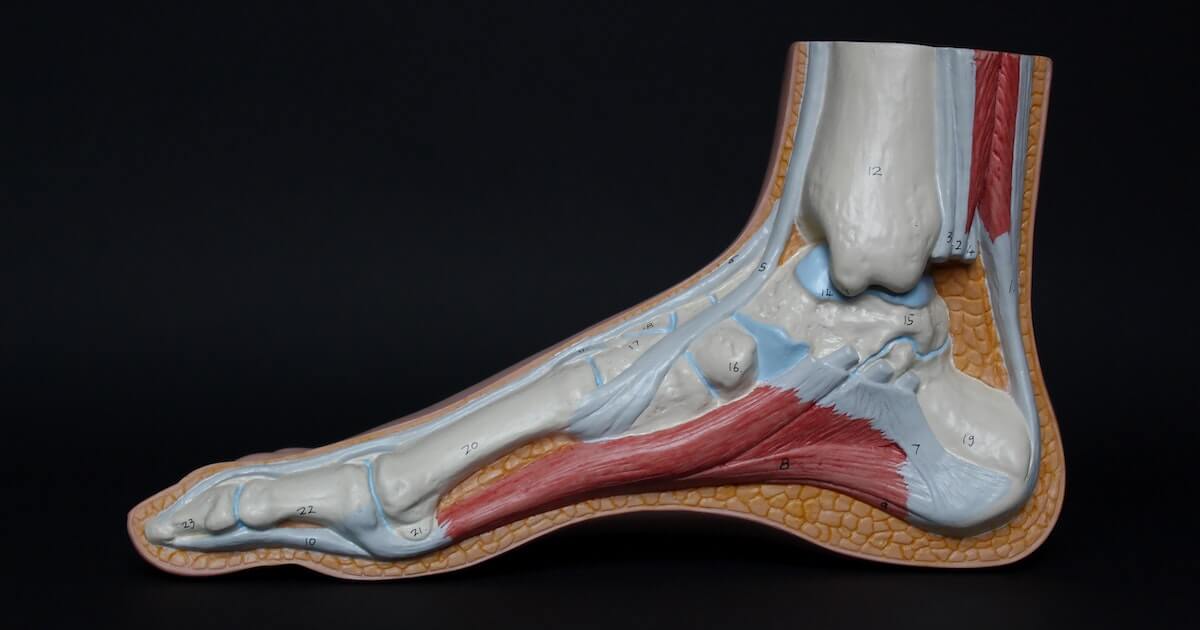
Plantar fasciitis is inflammation of the plantar fascia that encases the ligament which spans the sole of your foot, connecting the heel of your foot to the base of your toes. It is caused by small tears that occur in the plantar fascia as a result of repeated foot strain. It’s the most common cause of heel pain and tends to be progressive unless treated. 

Plantar fasciitis sufferers experience what is typically described as being an acute, stabbing pain in their heels. The pain tends to be worse in the mornings or after long periods of sitting or resting. 

What Causes it

Plantar fasciitis is caused by repetitive strain to the soles of the feet. It is a common ailment suffered by individuals with occupational or athletic activities that place a lot of tension and stress on their feet. It can also result from improper foot dynamics from overly high or flat arches, unsuitable footwear, or an imbalanced gait, and is a common occurrence for:

  • People whose occupation requires them to spend long periods on their feet (ie: nurses, factory workers, hair stylists and clerks). 
  • Runners, dancers and individuals who partake in activities that place excess strain on their feet. 
  • Individuals between the ages of 40 – 60 (most commonly). 
  • Anyone carrying excess weight. 
  • People with gait issues or suboptimal foot dynamics. 

A Word of Warning About Footwear


The Importance of Proper Footwear

Walking barefoot and sporting flip-flops may be part of island living during the summer months, but should be avoided by those who are prone to foot strain. It’s also pertinent that runners and other athletes replace worn-out athletic shoes and ensure their footwear offers adequate arch support, cushioning and shock absorption that’s based on proper foot ergonomics and according to their sport. 

Plantar Fasciitis Treatment

It’s best to treat plantar fasciitis at the early onset of symptoms. People who ignore symptoms often unknowingly adjust their walking patterns in efforts to partially relieve pain, resulting in undue strain and injury to other areas of the body including the knees, hip and back. This is why prompt treatment is prudent. 

Plantar Fasciitis treatment often combines physiotherapy, massage therapy, gait analysis and custom orthotics to relieve pain and tension and prevent further foot strain. Treatment may include recommendations for icing, rest and the short-term use of over the counter pain-killers as needed.

The good news is that with proper treatment and new preventative measures, plantar fasciitis symptoms can be relieved and sufferers can often comfortably return to the activities they enjoy. 

If You Suspect You Have Plantar Fasciitis or Are Concerned About Foot Strain:

Contact Diversified Health Clinic today to book an appointment, or for more information on the treatment options we provide, including our innovative GaitScan Analysis. Our integrated approach and amenities empower our practitioners to provide you with treatment options that are custom-tailored to your specific needs. We also offer direct billing and weekend appointments.

July 1, 2020/by Diversified Health Clinic
https://www.diversifiedhealth.ca/wp-content/uploads/2020/06/DHC-Plantar-Faciitis-RF-Unsp-1200-x-630-CX.jpeg 630 1200 Diversified Health Clinic https://www.diversifiedhealth.ca/wp-content/uploads/2026/01/DiversifiedHealth-logo.png Diversified Health Clinic2020-07-01 08:00:152020-06-30 09:41:48Plantar Fasciitis: What It Is and How It’s Treated
Health Information, Massage Therapy, Physiotherapy

Could Your Foot Pain Be Plantar Fasciitis?

Plantar fasciitis is a painful condition located along the bottom of the foot, predominantly in the arch area. It is caused by overuse of the arch tendon (plantar fascia) of the foot; and if you’ve ever suffered from Plantar Fasciitis, you know that this can be one of the most irritating and hard to treat injuries there is.

The most common causes of plantar fasciitis are overly tight or inflexible calf muscles and/or surrounding and supporting tendons which leads to persistent pronation of the foot. This pronation can produce over-stretching of the arch tendon, and can lead to inflammation and thickening of the tendon.

The Plantar Fascia is a band of tissue that runs from your heel down through most of the length of your foot. It could be considered to be a “shock absorber” for your arch. This tissue is also known as the arch tendon. When this tissue becomes inflamed, the result is Plantar Fasciitis, a condition that can result in moderate to severe pain in your heel and foot.

Plantar Fasciitis, over time, can also cause a heel spur. If untreated, the condition can become degenerative, causing further pain, symptoms and long-term treatment challenges.

Not surprisingly,  runners, golfers and tennis players who spend long hours on their feet are some of the most common victims of Plantar Fasciitis.  Additionally, those over 40 are more susceptible, as is anyone who is predisposed to the condition. People with tight calves are thought to be more likely to develop the condition, as is anyone who spends time on their feet without proper footwear.

Temporary relief from Plantar Fasciitis can often be found through stretching localized massage, or anti-inflammatory medications. This relief is typically short-lived, however, as the condition will usually persist until it is properly treated and the underlying cause is identified and addressed.

Permanent relief from Plantar Fasciitis will usually come from a combination of the following approaches:

– Improved footwear for the activity you’re engaging in

– Orthotics, if determined to be necessary to proper foot alignment and support.

–  Specific Stretching for the foot and calf muscles

– Physiotherapy; IMS is often used in this area.

– Massage

– Laser Therapy to treat the inflamed area

– Athletic tape to support the arch tendon

– Shockwave Therapy to treat the inflamed area

You should seek treatment if you suspect that you may have this conditions as it can become more severe if left unattended.

August 30, 2018/by Diversified Health Clinic
https://www.diversifiedhealth.ca/wp-content/uploads/2026/01/DiversifiedHealth-logo.png 0 0 Diversified Health Clinic https://www.diversifiedhealth.ca/wp-content/uploads/2026/01/DiversifiedHealth-logo.png Diversified Health Clinic2018-08-30 09:00:402018-08-30 09:00:40Could Your Foot Pain Be Plantar Fasciitis?
Health Information, Orthotics

Shoe Insoles: Cushioned or Supportive

Orthotics Victoria BC

The first step when wearing orthotics (shoe insoles) starts when you shop for shoes. In order to take care of your feet, you need select a shoe, runner, or boot with a great fit and is specific to your chosen activity.

The next step is to determine if the insole (sock liner) that comes with your new shoe will be adequate for your gait, or if you need to replace it with a specific type of purchase a new insole.

What is a sock liner?

A sock liner is the removable orthotic or insole that sits between the foot and sole of most shoes. Though sock liners can vary in thickness and comfort, the primary function is to prevent the foot from rubbing against any stitching or materials that are used in the making of the shoe. Most sock liners that come in a new pair of shoes provide little support or cushioning.

There are two main types of shoe insoles:  cushioned – which will mold to our foot bed and supportive – which are functional.  In order to provide cushioning, the insole need to be flexible, and soft. In order to provide support, the  insole must be firm, and provide structure under the load of our body weight. (Materials can make a big impact on the size and weight of a support insole).

The need for additional support is the major reason to consider an insole. Most people need a more rigid arch support that can help hold the foot in an upright and stable position. Wearing a supportive insole can help control motion, relieve strain, and stabilize a foot that might have arch or heel pain.

Cushioned inserts are designed for people who want to reduce shock. Metatarsal pads for instance, are simply cushioned pads that fit behind the ball of your foot, distributing weight which  offloads and reduces pressure under the troublesome spot.

Foot conditions that can be helped by wearing an insole:

  • Achilles Tendonitis
  • Arch Pain
  • Bunions
  • Diabetic/Arthritic Foot
  • Flat Feet
  • Heel Spur
  • Over Pronation
  • Plantar Fasciltis
  • Shin Splints
  • Under Pronation

If your foot pain or discomfort continues or becomes worse , please talk to your healthcare practitioner to see if something more serious is going on.

August 24, 2017/by Carmen Scott
https://www.diversifiedhealth.ca/wp-content/uploads/2019/05/orthotics-victoria-bc.jpg 267 400 Carmen Scott https://www.diversifiedhealth.ca/wp-content/uploads/2026/01/DiversifiedHealth-logo.png Carmen Scott2017-08-24 10:19:282021-12-09 05:48:04Shoe Insoles: Cushioned or Supportive
Chiropractic Care, Physiotherapy

Your Foot & Heel Pain Might be Plantar Fasciitis

Plantar fasciitis can be a painful condition caused by overuse of the arch tendon (plantar fascia) of the foot.

The most common cause of plantar fasciitis is a tight calf muscle which leads to persistent pronation of the foot, which over stretches the arch tendon, and can lead to possible inflammation, thickening of the tendon, and further injury.

Strenuous activities such as running or excessive walking in footwear that does not provide the proper support can make you more at risk, causing additional stretching of the plantar fascia. Being overweight can also be a factor and place you at risk due to the excess weight impacting on the foot.

A Chiropractor or Physiotherapist can provide treatment for this type of foot injury.

Home Treatments can consist of:

  • Resting your feet
  • Reduce inflammation
  • Wear proper fitted shoes, with a good arch support
  • Wear orthotics
  • Wear slippers, slip-on’s, or any type of foot wear that has a an arch support at all times

Clinical Treatments can consist of:

A healthcare practitioner can instruct you in a series of exercises to stretch the plantar fascia and tendons and to strengthen lower leg muscles, which stabilize your ankle and heel. A therapist might also apply athletic tape to support the bottom of your foot.

Shock Wave therapy initiates a healing response by the body; causing blood vessel formation and increased delivery of nutrients to the affected area, which stimulates a repair process and relieves the symptoms of pain.

Dry needling /IMS  causes minor bleeding within the tissues and can break up scar tissue. This minor trauma allows the body to recognize the injured tissue as an acute problem area and  increases blood flow and the delivery of nutrients to the affected area.

The healthcare practitioners will also analysis your gait and see if orthotics can be part of the solution for treatment and prevention.  Plantar fasciitis is a condition that has a high re-injury rate.

July 24, 2017/by Carmen Scott
0 0 Carmen Scott https://www.diversifiedhealth.ca/wp-content/uploads/2026/01/DiversifiedHealth-logo.png Carmen Scott2017-07-24 08:37:372017-07-24 08:37:37Your Foot & Heel Pain Might be Plantar Fasciitis
Health Information, Physiotherapy

Plantar Fasciitis

Plantar FasciitisPlantar fasciitis is a painful condition caused by overuse of the arch tendon (plantar fascia) of the foot; and if you’ve ever suffered from Plantar Fasciitis, you know that this can be one of the most irritating and hard to treat injuries there is.

The most common cause of plantar fasciitis is an overly tight calf muscle which leads to persistent pronation of the foot, which produces over-stretching of the arch tendon, and can lead to inflammation and thickening of the tendon.

The Plantar Fascia is a band of tissue that runs from your heel down through most of the length of your foot. It could be considered to be a “shock absorber” for your arch. This tissue is also known as the arch tendon. When this tissue becomes inflamed, the result is Plantar Fasciitis, a condition that can result in moderate to severe pain in your heel and foot.

Plantar Fasciitis, over time, can also cause a heel spur. If untreated, the condition can become degenerative, causing further pain, symptoms and long-term treatment challenges.

Not surprisingly,  runners, golfers and tennis players who spend long hours on their feet are some of the most common victims of Plantar Fasciitis.  Additionally, those over 40 are more susceptible, as is anyone who is predisposed to the condition. People with tight calves are thought to be more likely to develop the condition, as is anyone who spends time on their feet without proper footwear.

Temporary relief from Plantar Fasciitis can often be found through stretching localized massage, or anti-inflammatory medications. This relief is typically short-lived, however, as the condition will usually persist until it is properly treated and the underlying cause is identified and addressed.

Permanent relief from Plantar Fasciitis will usually come from a combination of the following approaches:

– Improved footwear for the activity you’re engaging in

– Orthotics

– Weight loss

–  Specific Stretching for the foot and calf muscles

– Physiotherapy

– Massage

– Laser Therapy to treat the inflamed area

– Kineso-tape to support the arch tendon

– Shockwave Therapy to treat the inflamed area

You should seek treatment if there is pain when pressing on the inside of the heel or if the pain is worse first thing in the morning.  If left unattended the condition can become more severe, with the pain worsening throughout the day.

March 13, 2014/1 Comment/by Carmen Scott
0 0 Carmen Scott https://www.diversifiedhealth.ca/wp-content/uploads/2026/01/DiversifiedHealth-logo.png Carmen Scott2014-03-13 09:32:452014-03-13 09:32:45Plantar Fasciitis
Chiropractic Care, Health Information, Orthotics, Physiotherapy

Orthotic FAQ | Advanced Health Care Products Victoria

Orthotic FAQ | Advanced Health Care Products VictoriaA custom orthotic is a biomechanical medical appliance designed to align the foot and ankle into the most anatomically efficient position.  Orthotics work by decreasing high-pressure areas, stabilizing foot alignment and cushioning the foot.

Custom orthotics reduce stress and strain on your body by bringing your feet back into proper alignment by re-aligning the foot and redirecting / reducing certain motion that take place during the gait cycle.

The longer you wear your orthotics, the more benefit you will get out of them. If your daily activities require that you change your footwear; you should have a second pair of orthotics designed for that specific activity.  The type of orthotic depends on many factors including lifestyle, athletic activities (i.e., walking, running), foot type, and the problems that are being encountered.  Remember that the orthotics will not permanently change your anatomy and will only “work” when you are standing or walking on them.

Custom orthotics are used to relieve symptoms of common injuries, such as plantar fasciitis, over-pronation, under-pronation,  and various foot and ankle injuries, as well as helping individuals with diabetes or arthritis. Orthotics complement other treatments such as physiotherapy and chiropractic.

The symptoms of poor foot mechanics can include any one of the following:

  • Localized foot pain
  • Bunions, hammer toes
  • Arch/heel pain
  • Leg/knee pain
  • Hip or back pain – even neck pain

Custom orthotics work to realign the structure of your foot, so you may feel pressure in some areas of the orthotic. When you start wearing your orthotics, it is normal for the orthotics to feel strange; however, properly fitted orthotics should not cause any new pain, blistering or redness.

Keep in mind that your shoes act as a foundation for the foot and provide a stable base for an orthotic to sit on. It is important to wear appropriate footwear, as the footwear itself is part of the treatment.  A foot orthotic can be rendered ineffective by placing it in an inferior shoe or runner.

Although symptomatic relief will not occur over night, consistently wearing your orthotics for a period of time will realign your foot, allow healing to occur and help position your foot so you will be using the right muscles at the right time, minimizing fatigue and allowing your muscles to be used more efficiently.

Talk to your health care practitioner and see if you are a good candidate for custom orthotics.

November 9, 2012/by Carmen Scott
https://www.diversifiedhealth.ca/wp-content/uploads/2026/01/DiversifiedHealth-logo.png 0 0 Carmen Scott https://www.diversifiedhealth.ca/wp-content/uploads/2026/01/DiversifiedHealth-logo.png Carmen Scott2012-11-09 08:50:102021-12-09 05:50:15Orthotic FAQ | Advanced Health Care Products Victoria
Chiropractic Care, Physiotherapy

Leg Pain & Treatment Options | Chiropractic Victoria BC

Leg Pain & Treatment Options | Chiropractic Victoria BCLeg pain can range from a mild irritation to an unbearable pain that makes it difficult to complete any day-to-day activities. Leg pain can take many different forms, from a dull ache to searing pain. Other symptoms that may also occur are a pins-and-needle sensation, numbness or weakness.


Leg pain can be caused by a problem in the leg, but often it starts with a problem in the lower back, where the sciatic nerve originates, and then travels down,  along the path of the nerve. For this reason, if you have leg/foot pain, or leg/foot weakness or numbness, you should have a health care practitioner include an examination of the lower back.

When a nerve root in the lower spine is irritated (sciatica) you can experience a searing pain that starts in the lower back area and radiates down to the leg. Sciatic pain can be a constant or intermittent pain, and for many people this pain can be excruciating and debilitating. Spinal decompression treatments can bring relief for this type of back pain.

Numbness can be another symptom of leg ”pain” and is frequently caused by a pinched nerve.  Numbness coming from a low back problem can interfere with movement, balance, level of fatigue and can be a symptom of something more serious such as MS or a stroke. Both chiropractic and physiotherapy can treat a pinched nerve.

If you sit or stand for long periods of time and you have leg pain, you might suffer from positional leg pain (spinal stenosis/facet joint, which is a problem of anatomy in the low back) this pain can usually be relieved by simply changing your positions.  You can also alleviate these symptoms by bending over, or with gentle stretching.

Other causes of leg pain can be due to either over-pronation/under-pronation of the foot; which can cause added stress on your leg and back muscles. A gait scan of your feet will diagnosis if you are a candidate for orthotics.

The types of leg pain experienced can vary widely from patient to patient, so it is important that you seek a diagnosis from a trusted health care practitioner.

November 7, 2012/2 Comments/by Carmen Scott
https://www.diversifiedhealth.ca/wp-content/uploads/2026/01/DiversifiedHealth-logo.png 0 0 Carmen Scott https://www.diversifiedhealth.ca/wp-content/uploads/2026/01/DiversifiedHealth-logo.png Carmen Scott2012-11-07 09:20:462012-11-07 09:20:46Leg Pain & Treatment Options | Chiropractic Victoria BC

Search our Blog

Search Search

Topics of Interest

Acupuncture Back Pain Chronic Back Pain Chronic Pain Custom Orthotics Diversified Health Clinic Victoria BC Dry Needling eToims exercise fitness Foot pain GoodLife Fitness Victoria Marathon Headaches Health Care Victoria Health Tips Healthy lifestyle Immune System IMS Inflammation Joint Pain Knee Injuries Low Back Pain Marathons Migraines natural health practitioner orthotics Pain management Pain Relief Physiotherapy physiotherapy victoria bc Plantar fasciitis Registered Massage Therapist Registered Massage Therapy Runner's knee Running Seasonal Allergies Skin Cancer Spinal Decompression Sports Injuries Stress Stretches Sunscreen Victoria therapeutic massage Vitamins walking

Categories

  • Acupuncture
  • Athletic Therapy
  • Careers
  • Chiropractic Care
  • Events
  • Exercise Library
  • Fitness
  • Guest Bloggers/Articles
  • Health Information
  • Massage Therapy
  • News
  • Orthotics
  • Physiotherapy
  • Practitioners in Focus
  • Uncategorized
  • Victoria Healthcare News
  • Video Library

Archive

News & Events

  • How to Heal Your Pelvic Floor After Giving Birth | Pelvic Floor Physiotherapy Guide July 30, 2026
  • About Matthew Bryan, DC November 7, 2025
  • The Benefits of Shockwave Therapy Treatments February 28, 2023
  • Piriformis Syndrome: A Real Pain in the Butt January 31, 2023
  • Searching for a Personal Trainer in Victoria to Help You Achieve Your Goals? December 31, 2022
  • Are Winter Blues + Holiday Stress Making You Feel Grinchy?  November 28, 2022
  • Fact or Fiction? Is Joint Pain Worse in Cold Weather? October 28, 2022

patients choice winner

A Victoria, BC Chiropractor winner of the Patients’ Choice Awards.Verified by Opencare.com

Diversified Health Clinic

The Mosaic Building
1063 Fort St, Victoria, BC
V8V 3K5, Canada
250-382-0018
Monday7 a.m. – 7 p.m.
Tuesday7 a.m. – 7 p.m.
Wednesday7 a.m. – 7 p.m.
Thursday7 a.m. – 7 p.m.
Friday7 a.m. – 7 p.m.
Saturday9 a.m. – 4 p.m.
SundayBy Appointment
© Copyright - Diversified Health Clinic. Website by Victoria's iDreamDigital.
  • Link to Facebook
  • Link to Instagram
  • Link to X
  • Link to Youtube
  • Link to Rss this site
  • Link to Mail
Scroll to top Scroll to top Scroll to top

Would you like to learn more about our COVID-19 Protocols?

Our ProtocolsDismiss

Cookie and Privacy Settings


How we use cookies

We may request cookies to be set on your device. We use cookies to let us know when you visit our websites, how you interact with us, to enrich your user experience, and to customize your relationship with our website.

Click on the different category headings to find out more. You can also change some of your preferences. Note that blocking some types of cookies may impact your experience on our websites and the services we are able to offer.

Essential Website Cookies

These cookies are strictly necessary to provide you with services available through our website and to use some of its features.

Because these cookies are strictly necessary to deliver the website, refusing them will have impact how our site functions. You always can block or delete cookies by changing your browser settings and force blocking all cookies on this website. But this will always prompt you to accept/refuse cookies when revisiting our site.

We fully respect if you want to refuse cookies but to avoid asking you again and again kindly allow us to store a cookie for that. You are free to opt out any time or opt in for other cookies to get a better experience. If you refuse cookies we will remove all set cookies in our domain.

We provide you with a list of stored cookies on your computer in our domain so you can check what we stored. Due to security reasons we are not able to show or modify cookies from other domains. You can check these in your browser security settings.

Google Analytics Cookies

These cookies collect information that is used either in aggregate form to help us understand how our website is being used or how effective our marketing campaigns are, or to help us customize our website and application for you in order to enhance your experience.

If you do not want that we track your visit to our site you can disable tracking in your browser here:

Other external services

We also use different external services like Google Webfonts, Google Maps, and external Video providers. Since these providers may collect personal data like your IP address we allow you to block them here. Please be aware that this might heavily reduce the functionality and appearance of our site. Changes will take effect once you reload the page.

Google Webfont Settings:

Google Map Settings:

Google reCaptcha Settings:

Vimeo and Youtube video embeds:

Other cookies

The following cookies are also needed - You can choose if you want to allow them:

Privacy Policy

You can read about our cookies and privacy settings in detail on our Privacy Policy Page.

Privacy Policy
Accept settingsHide notification only