
Injury Recovery in Greater Victoria, BC - Call us to book an appointment: (250) 382-0018
Diversified Health Clinic
  • Welcome
  • About
    • Meet our Team
      • Dr. Matthew Bryan DC
      • Dr. Tessa Bryan DC
      • Dr. Krisjan Gustavson DC
      • Dr. Alexia Grelson DC
      • Dr. Ian Hyams MD
      • Dr. Jennifer Blum MD
      • Kanu Priya MPT
      • Ivy Elling-Quaintance MPT
      • Spirit Donahue MPT
      • Morag Hart RMT
      • Craig Lawrence RMT
      • McKenzie Connell RMT
      • Braedan Pearce RMT
      • Angelina Schaaf BCAK
      • Christian Schwarz BCAK
      • Annie Wang R.Ac R.TCM.P
      • Rebecca Thompson R.Ac R.TCM.P
      • Lauren Ching R.Ac
      • Jun Liu R.Ac
      • Laura Grohovac CCC
    • Our Clinic
    • Careers
  • Disciplines
    • Disciplines
      • Chiropractic
      • Physiotherapy
      • Registered Massage Therapy
      • Kinesiology
      • Acupuncture
      • Clinical Counselling
      • Medical Doctor
      • Personal Training
    • Treatments
      • Spinal Decompression
      • Shockwave
      • Class IV K Laser
      • eToims Needle-less IMS
      • Orthotics
      • Pelvic Floor Physiotherapy
      • EMSELLA
  • Conditions
    • Plantar Fasciitis
    • Running Injuries
    • Allergies
    • Concussion Treatment
    • Bursitis
    • Tennis Elbow
    • TMJ Disorder
    • Automobile Collisions
    • Nerve Pain with Sciatica
    • Sport Injuries
    • Stress
    • Runner’s Knee
    • Vertigo & Vestibular Rehab
    • Concussions
  • Pricing
  • News & Events
    • News
    • Events
    • Practitioners In Focus
    • Exercise Library
  • Contact
  • ICBC Claims
  • Book Now!
  • News
  • Menu Menu
  • Link to Facebook
  • Link to Instagram
  • Link to X
  • Link to Youtube
  • Link to Rss this site
  • Link to Mail
  • Welcome
  • About
    • Meet our Team
    • Our Clinic
    • Careers
  • Disciplines
  • Conditions
  • Pricing
  • News
    • News & Advice
    • Practitioners In Focus
  • Contact
  • ICBC Claims
  • Book Now!

Tag Archive for: Spinal Decompression

Chiropractic Care, Health Information, Physiotherapy

Spinal Decompression Therapy Explained

Spinal Decompression Therapy Explained

If you have been struggling with chronic back, neck or sciatic pain, you do not have to live with the pain! spinal decompression therapy is a painless, non-surgical, drug-free way to help relieve chronic back, neck and sciatic pain. Continue reading to learn how spinal decompression works and why it’s an option worth exploring. 

What is Spinal Decompression Therapy?

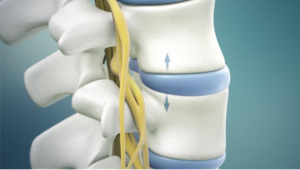
Non-surgical spinal decompression therapy utilizes a type of motorized traction that involves stretching the spine with the goal of relieving back pain and/or leg pain. The bones of the spine are slowly separated, and pressure is slowly reduced within the disc until a vacuum is formed. This vacuum creates negative pressure and space within the disc to allow disc fluid to move back into place. This reduces the bulge or herniation of the disc and creates an environment where the disc can receive more nutrients and therefore be able to heal more effectively.

Spinal Compression Is Used to Treat:
  • Back, neck or sciatica pain
  • Bulging or herniated disks
  • Degenerative disk disease
  • Worn Spinal Joints (posterior facet syndrome)
  • Injured or diseased spinal nerve roots

When Do You Use Non-Surgical Spinal Decompression Therapy?

Spinal decompression therapy is for patients looking for a non-surgical and non-drug approach to relieving chronic back pain, sciatica, and spinal stenosis. Spinal decompression is also used for patients that present with an MRI that confirms herniated discs causing nerve pressure. However, spinal decompression treatments cannot be used for patients who are pregnant or suffering from spinal fractures, tumours of the spine, abdominal aortic aneurysm, severe osteoporotic disease, or metal implantations in their spine. 

What Are Spinal Decompression Treatments Like?Spinal Decompression Therapy Table
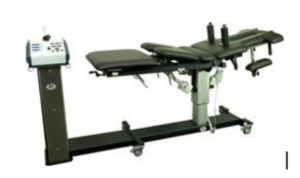
During spinal decompression treatments, fully clothed patients are secured into a harness that is attached to the motorized table. The practitioner will program the table for your treatment and the amount of traction your spine will go through. Depending on the treatment, you will be lying either face-up or face down. Each session lasts no longer than 15-20 minutes. You will feel pressure applied to your lower back and will feel as though you are being “stretched out.” You should not feel any pain during spinal decompression therapy.

How Long Until You See Results?
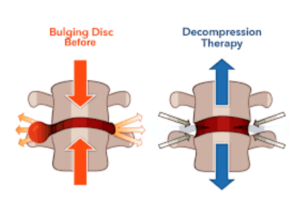
Before and After Spinal Decompression Therapy

Individual results vary; however, most patients notice a difference within their first 5-6 spinal decompression therapy treatments and experience pain relief within as few as 6-10 treatments.

Not only is spinal decompression painless – patients often enjoy the relief they feel from their symptoms when they are on the table being decompressed. Most patients will need to come in for treatment three times a week for one month, transitioning from passive to active treatments as their bodies respond and will also be prescribed a customized exercise program to target the areas that require more stabilization.

Clinical results show that spinal decompression has been effective in over 75% of patients treated. In addition, most patients found long-term relief or effective management of pain when they completed their spinal decompression treatments. Your practitioner may also recommend additional treatment modalities such as heat/cold therapy, electric stimulation, K-Laser and home exercises.

Benefits of Spinal Decompression Therapy

  1. Provides pain relief by relieving tension in tight, spasming or injured muscles. Spinal decompression helps to stimulate the nervous system to release neuro-chemical signals that have an analgesic effect on the body. 
  2. Promotes the healing of spinal disc tissues by imposing a vacuum-like force on the spinal discs, which helps to draw healing fluids, cells, and other substances toward the damaged tissue. 
  3. Helps restore normal spinal joint and disc alignment with the same vacuum-like force. That vacuum-like force helps to align the joints and discs which prevents further pain, inflammation, impaired mobility, and dysfunction.
  4. Relieves pressure on spinal nerves by increasing the space around the nerves which allows them to begin healing.

For More Information on Spinal Decompression Therapy (and Whether It’s Right for You):
Contact Diversified Health Clinic at 250-382-0018 to find out more about spinal decompression treatments, or book with our practitioners online at www.diversifiedhealth.janeapp.com

#physiotherapy #chiropractic #backpain #chronicbackpain #victoriabc #sciatica #degenerativedisc
December 17, 2021/by Diversified Health Clinic
https://www.diversifiedhealth.ca/wp-content/uploads/2021/12/DH-Spinal-Decompression-Therapy-SP-DEPO-1200x630-CX.jpg 630 1200 Diversified Health Clinic https://www.diversifiedhealth.ca/wp-content/uploads/2026/01/DiversifiedHealth-logo.png Diversified Health Clinic2021-12-17 23:07:452021-12-20 23:26:26Spinal Decompression Therapy Explained
Chiropractic Care, Physiotherapy

Treat Chronic Back Pain with Spinal Decompression

Spinal decompression provides relief to back and neck pain sufferers by gently reducing the pressure within spinal discs; this involves stretching the spine, using a traction table or similar motorized device, with the goal of relieving back pain and/or leg pain.

During a nonsurgical spinal decompression treatment, the spinal vertebrae are slowly and methodically separated using a computer-controlled Spinal Decompression table. (Kennedy Decompression Table)

As the vertebrae are separated pressure is slowly reduced within the disc until a vacuum is formed. This vacuum allows the gelatinous center of the disc to move back inside, thereby reducing the disc bulge or disc herniation.  Joint bio-mechanics are improved and spasms or tightness in back muscles are decreased.

Significant disc bulge reduction removes pressure off the spinal nerves and drastically reduces pain and disability. This momentary lower pressure in the disc, also pulls much-needed oxygen, nutrients and fluid into injured and degenerated discs allowing the healing to begin.

Is Spinal Decompression Right For Me? | chiropractor victoria bc

Spinal Decompression Table

On your first visit to Diversified Health Clinic your health care practitioner will take a detailed medical history and complete a physical exam.

Therapy sessions typically last 20 minutes with most people feeling pain relief with as few as 3-5 treatments. It is important to remember however, that pain subsiding does not infer that your discs and spine are healed, so it’s critical that patients follow the treatment protocol prescribed in order to achieve the full value of the decompression therapy.

Spinal Decompression can help alleviate pain caused by the following conditions:

  • Severe or chronic low back and neck pain
  • Arthritis pain in neck and back
  • Pinched nerves
  • Sciatica
  • Degenerative disc / joint disease /collapsed discs
  • Spinal stenosis
  • Herniated or bulging disc
  • Numbness, tingling or burning pain

For patients suffering from chronic pain, spinal decompression therapy can help to alleviate pain, and get you back to your daily activities.

Please contact our clinic if you have any questions regarding nonsurgical spinal decompression therapy.


July 27, 2017/by Carmen Scott
0 0 Carmen Scott https://www.diversifiedhealth.ca/wp-content/uploads/2026/01/DiversifiedHealth-logo.png Carmen Scott2017-07-27 10:25:422021-02-17 19:06:06Treat Chronic Back Pain with Spinal Decompression
Acupuncture, Chiropractic Care, Massage Therapy, Physiotherapy

6 Tips To Prevent Chronic Back Pain

6 Tips To Prevent Chronic Back PainA healthy back is straight, moves easily and is free of pain.  The most common area for chronic back pain is the lower back; also called the lumbar spine.

Back pain is defined as either acute or chronic. Practitioners diagnose low back pain as acute if it lasts less than a month and is not caused by serious medical conditions. If the pain persists, it is considered chronic back pain. Almost 20 million (2 in 3) Canadians will have at least one episode of back pain in their lifetime.

Warning Signs of Chronic Back Pain?

  • If the pain lasts longer than month.
  • The pain can be anywhere in the back. It can be in one area only or spread across a wide area.
  • Your back might be stiff and the muscles swollen. This combination of pain, stiffness and swelling is called inflammation.
  • Some injuries will cause muscles spasms in the back, and pain or weakness in a leg.

Back pain can develop anywhere from the neck to the lower spine. The pain can be localized or spread across a wide area and radiate from a central point. Muscle spasms may occur at the site of the pain. Some people also get pain or weakness in a leg as a result of back injury.

What causes Chronic Back Pain?

  • Poor posture is the most common cause of back pain.
  • Injury due to lifting heavy objects is also a frequent cause of back pain.
  • Being overweight and not exercising enough can increase your risk of back injury.
  • If your back is weak you can get back pain when you get upset or feel stressed.
  • Some types of arthritis can cause chronic back pain.

How to prevent Chronic Back Pain

  • When you lift a heavy item keep it as close to your body as possible. Keep your back straight and use your legs to do the lifting.
  • Use helpful devices such as a cart to carry your grocery bags.
  • Maintain a healthy weight to avoid putting extra stress on your joints.
  • Be aware of your posture
  • Wear shoes that support your feet; this will help keep your back and legs straight.
  • Sleep on a firm mattress and support your neck properly with pillows.

Disciplines that treat Chronic Back Pain – Acupuncture | Chiropractic | Massage | Physiotherapy

Treatments for Chronic Back Pain – eToims | Laser | Spinal Decompression | Shockwave Therapy

April 25, 2013/by Carmen Scott
0 0 Carmen Scott https://www.diversifiedhealth.ca/wp-content/uploads/2026/01/DiversifiedHealth-logo.png Carmen Scott2013-04-25 10:00:092013-04-25 10:00:096 Tips To Prevent Chronic Back Pain
Chiropractic Care, Physiotherapy

Physiotherapy technology treatment options: an overview

Innovations in technology are giving health practitioners a new set of tools to treat musculoskeletal ailments. New equipment has enabled chiropractors, physiotherapists and other healthcare practitioners to offer healing and cessation of pain without the use of pharmaceuticals or surgery.

More Treatment Options with Modern Technology | physiotherapy victoria bc

Diversified Health Clinic

Spinal Decompression

At Diversified Health the state-of-the-art equipment & diagnostic tools can be used for evaluating range of motion, muscle balance, nerves or posture of your body, neck, arms or legs.  Chronic or acute back pain in the neck and lower back area can now be specifically targeted with a Spinal Decompression Table. This computerized table is set to manipulate only the area that has the problem. A series of traction and relaxation movements allows the disc to move back into its original place, taking pressure off the nerve and relieving pain.

Shockwave therapy

Accidents and sports injuries to soft tissue can now be treated with ultrasound , advanced laser and Shockwave therapy. These treatments penetrate into the deep tissue and ligaments, stimulating healing and cell regeneration.

Laser Therapy

Class IV Laser Therapy or “photobiomodulation”, is the use of specific wavelengths of light (red and near-infrared) to create therapeutic effects.  These effects include improving healing time, pain reduction, increased circulation and decreased swelling. Conditions treated include musculoskeletal injuries, chronic and degenerative conditions and wounds.

TENS Therapy

TENS (Transcutaneous electrical nerve stimulation) – electrical current applied through two electrodes. This stimulation is usually very comfortable to the patient and provides immediate reduction of pain and muscle relaxation.

Ultrasound

Ultrasound is a sound wave that human year cannot hear. It is mechanical energy used to break down scar tissue, increase metabolism and decrease pain.

eToims

Electrical Twitch Obtaining Intra-Muscular Stimulation (eToims) is designed to alleviating pain and dysfunction caused by muscle and nerve injury. It involves the use of an electric current to produce a twitch in the muscle that is strong enough to stimulate the deep fibers of a muscle.

Spinal Decompression

Spinal Decompression is the therapeutic elongation of the spine in a slow, gentle manner in order to relieve pressure on compressed vertebrae and discs. This treatment is appropriate for those individuals who have low back pain that is caused by herniated discs or degenerated discs. To achieve the best results, spinal decompression is always combined with other types of physiotherapy such as active exercises and manual therapy.

The best technology

Modern technology and equipment used by Diversified Health is giving people more treatment options and empowering them to take control of their own well-being, while improving the quality of individual patient care.

February 8, 2013/by Carmen Scott
https://www.diversifiedhealth.ca/wp-content/uploads/2026/01/DiversifiedHealth-logo.png 0 0 Carmen Scott https://www.diversifiedhealth.ca/wp-content/uploads/2026/01/DiversifiedHealth-logo.png Carmen Scott2013-02-08 08:04:092013-02-08 08:04:09Physiotherapy technology treatment options: an overview
Chiropractic Care

Degenerative Disc Disease | Rehab Victoria BC

Degenerative Disc Disease | Rehab Victoria BCDegenerative disc disease is one of the most common causes of low back pain.

The lumbar disc is a well-designed structure in the spine. It is strong enough to resist terrific forces in multiple different planes of motion, yet it is still very mobile. However, too much physical activity, gravity, and injuries can cause the spinal column to compress, which narrows the channel through which blood freely flows; and this restriction of the needed nutrients can result in damage and deterioration.

The pain associated with degenerative disc disease is normally caused from inflammation and abnormal micro-motion instability.  Inflammation in the disc space can lead to low back pain radiating to the hips; with associated pain traveling down the back of the legs.

Patients with degenerative disc disease will have some underlying chronic low back pain, experiencing periodic severe low back pain. In an attempt to stabilize the spine and decrease the micro-motion, the body reacts to the disc pain with muscle spasms. The reactive spasms are what make patients feel like their back has “gone out”.

This is why Spinal Decompression tables are one of the most effective treatments for Degenerative Disc Disease.  Spinal Decompression uses a distraction force to relieve the nerve compression often associated with low back pain. This treatment specifically addresses the compression or pressure in the spinal column.

It is a non-surgical treatment that makes use of a specially-designed table that decompresses the specific area of the spine where the pressure is evident. The decompression process reduces the pressure in the affected area of the spine and restores it to its normal position. Spinal decompression’s primary goal is to allow much-needed oxygen, nutrients and fluid into injured and degenerated discs allowing the healing to begin.

Common Symptoms of Degenerative Disc Disease Include:

Low back pain made worse with sitting.  (in the seated position the discs are loaded three times more than standing)

Certain types of activity will  worsen the low back pain, especially bending, lifting and twisting.

Walking, and even running, will feel better than prolonged sitting or standing.

Feeling better by changing positions frequently. (lying down is the best position since this relieves stress on the disc space)

Please contact any of our health care practitioners for more information on Degenerative Disc Disease.

September 24, 2012/2 Comments/by Carmen Scott
https://www.diversifiedhealth.ca/wp-content/uploads/2026/01/DiversifiedHealth-logo.png 0 0 Carmen Scott https://www.diversifiedhealth.ca/wp-content/uploads/2026/01/DiversifiedHealth-logo.png Carmen Scott2012-09-24 10:48:282012-09-24 10:48:28Degenerative Disc Disease | Rehab Victoria BC
Chiropractic Care, Physiotherapy

Find Relief from a Herniated Disc with A Natural Health Practitioner

Your spine is made up of vertebrae and discs, so finding relief from a herniated disc with a natural health practitioner like a doctor of chiropractic makes sense.

Discs are like soft cushions between the bones of the spine. The discs in the spine let you move your backbone. When a disc between two bones in the spine presses on the nerves around the backbone, it’s called a herniated disc. The word “herniate” means to bulge or to stick out. Sometimes this is called a ruptured or slipped disc.

Find Relief from a Herniated Disc with A Natural Health Practitioner

Find Relief from a Herniated Disc

Herniated discs are most common in the lower part of your spine referred to as the lumbar spine. This area is constantly absorbing the impact of bearing the weight of the upper body.  The lower back is also critically involved in our body’s movements throughout the day, as we twist the torso in rotating side to side and as we hinge the back in flexion and extension while bending or lifting.

When part of a disc presses on a nerve, it can cause pain in the back and the legs. How bad the pain is depends on how much of the disc is pressing on the nerve. In most people with herniated discs, the pain spreads over the buttocks and radiates down the back of one thigh and into the calf. This is known as sciatica because the pain travels along the path of the sciatic nerve. Some people have pain in both legs, and will feel numb or a tingly sensation in their the legs or feet.

Here are some signs  If you have a herniated disc, the painful symptoms will worsen:

  • After you have been sitting down or standing for a long period.
  • During the night.
  • When you laugh, cough or sneeze
  • When you walk, even a short distance.
  • When you bend over backward

Becoming active as soon as possible is very important. Exercises can be helpful. The goal of exercise is to make your back and stomach muscles stronger. This will ease the pressure on your disc and make you hurt less. Ask your practitioner about safe exercises for your back, and start these exercises after your back is a little stronger and doesn’t hurt as much.

Spinal Decompression is painless, drug-free, non-surgical  treatment that has numerous published scientific studies reporting its’ effectiveness at 86% to 94%, and most people who have a herniated disc are better in about 4 – 6 weeks.

Spinal Decompression provides relief to severe back and neck pain sufferers by gently reducing the pressure within spinal discs. The bones of the spine are slowly and methodically separated and as the vertebrae are separated pressure is slowly reduced within the disc until a vacuum is formed. This vacuum “sucks” the gelatinous center of the disc back inside thereby reducing the disc bulge or disc herniation. Significant disc bulge reduction removes pressure off the spinal nerves and drastically reduces pain and disability. This “sucking” vacuum also pulls much-needed oxygen, nutrients and fluid into injured and degenerated discs allowing the healing to begin.

What can you do to help prevent a herniated disc?

Good posture (standing up straight, sitting straight, lifting with your back straight) can help your back by reducing the pressure on your discs.

  1. Bend your knees and hips when you lift something, and keep your back straight.
  2. Hold an object close to your body when you carry it.
  3. If you stand for a long time, put one foot on a small stool or box for a while.
  4. If you sit for a long time, put your feet on a small stool so your knees are higher than your hips.
  5. Don’t wear high-heeled shoes.
  6. Don’t sleep on your stomach.

If you or someone you know needs to find relief from a herniated disc with a natural health practitioner, please call Diversified Health Clinic for a free consultation.

April 2, 2012/1 Comment/by Carmen Scott
https://www.diversifiedhealth.ca/wp-content/uploads/2026/01/DiversifiedHealth-logo.png 0 0 Carmen Scott https://www.diversifiedhealth.ca/wp-content/uploads/2026/01/DiversifiedHealth-logo.png Carmen Scott2012-04-02 09:26:102012-04-02 09:26:10Find Relief from a Herniated Disc with A Natural Health Practitioner
Chiropractic Care, Health Information

Our Health Clinic Answers the Question, What is Chronic Back Injury?

Our health clinic answers the question, What is Chronic Back Injury?  A healthy back is straight, moves easily and is free of pain. When there is pain in any area of the back for a very long period of time, this is called chronic back injury, or chronic back pain.

The most common area for chronic back injury is the lower back; also called the lumbar spine.

Back pain is usually defined as either acute or chronic. Doctors may diagnose low back pain as acute if it lasts less than a month and is not caused by serious medical conditions. If the pain persists, it is considered chronic back injury, also called chronic back pain. This constitutes only 1% to 5% of back pain cases.

Our Health Clinic Answers the Question, What is Chronic Back Injury?
Chronic Back pain

Herniated discs are also a common source of back pain. Inside each disc is a jelly-like substance and 80% of the disc is water, which makes it very elastic. A disc does not contain any blood and relies on nearby blood vessels to keep it nourished. A herniated disc occurs when the cartilage between the vertebrae tears. As a result the cartilage and its contents will bulge out from between the vertebrae, often putting pressure on the nerves in the area.

How Common is Chronic Back Pain?

  • Almost 20 million (2 in 3) Canadians will have at least one episode of back pain in their lifetime.
  • 600,000 (1 in 50) Canadians will be disabled by it.
  • Chronic back injury occurs in both men and women.
  • It can affect people of any age, but older people are more likely to have chronic back pain.

Back pain is the most prevalent medical disorder in industrialized societies.

What are the Warning Signs of Chronic Back Injury?

  • If you have pain in the back that lasts for longer than a few days but less than a month this is called acute back injury.
  • If the pain lasts longer than month this is called chronic back injury.
  • The pain can be anywhere in the back. It can be in one area only or spread across a wide area.
  • Your back might be stiff and the muscles swollen. This combination of pain, stiffness and swelling is called inflammation.
  • Some injuries will cause muscles spasms in the back, and pain or weakness in a leg.

Back pain can develop anywhere from the neck to the lower spine. The pain can be localized or spread across a wide area and radiate from a central point. Muscle spasms may occur at the site of the pain. Some people also get pain or weakness in a leg as a result of back injury.

What causes Chronic Back Injury?

  • Many times the cause of chronic back injury is not known.
  • Poor posture is the most common cause of back pain.
  • Injury due to lifting heavy objects is also a frequent cause of back pain.
  • Being overweight and not exercising enough can increase your risk of back injury.
  • If your back is weak you can get back pain when you get upset or feel stressed.
  • Some types of arthritis can cause chronic back pain.

How to avoid Chronic Back Injury;

  • Be kind to your body. After doing heavy work, or doing the same task over and over, stop and rest.
  • Use your back, arms and legs in safe ways to avoid putting stress on joints.
  • When you lift a heavy item keep it as close to your body as possible. Keep your back straight and use your legs to do the lifting.
  • Use helpful devices such as a cart to carry your grocery bags.
  • Maintain a healthy weight to avoid putting extra stress on your joints.
  • Be aware of your posture and be sure to stand and sit straight.
  • Wear proper walking shoes that support your feet and help keep your back and legs straight.
  • Sleep on a firm mattress and support your neck properly with pillows. Do not sleep on your stomach as this can strain your neck.

Receiving regular maintenance treatments from your health practitioner is a great preventative measure; so when our health clinic answers the question, What is Chronic Back Injury? You will already know how to avoid this condition.

February 6, 2012/by Carmen Scott
https://www.diversifiedhealth.ca/wp-content/uploads/2026/01/DiversifiedHealth-logo.png 0 0 Carmen Scott https://www.diversifiedhealth.ca/wp-content/uploads/2026/01/DiversifiedHealth-logo.png Carmen Scott2012-02-06 12:04:092012-02-06 12:04:09Our Health Clinic Answers the Question, What is Chronic Back Injury?
Chiropractic Care

Is Spinal Decompression Right For Me? | chiropractor victoria bc

If you are asking the question, is spinal decompression right for me? | chiropractor victoria bc; there is a good chance that you are suffering from neck or back pain.  Spinal decompression provides relief to severe back and neck pain sufferers by gently reducing the pressure within spinal discs.

The bones of the spine are slowly and methodically separated using a state-of-the-art decompression table (Diversified Health Clinic uses the Kennedy Decompression Table). As the vertebrae are separated pressure is slowly reduced within the disc until a vacuum is formed. This vacuum “sucks” the gelatinous center of the disc back inside thereby reducing the disc bulge or disc herniation. Significant disc bulge reduction removes pressure off the spinal nerves and drastically reduces pain and disability. This “sucking” vacuum also pulls much-needed oxygen, nutrients and fluid into injured and degenerated discs allowing the healing to begin.

Is Spinal Decompression Right For Me? | chiropractor victoria bc

Spinal DecompressionTable

On your first visit to Diversified Health Clinic your practitioner Dr. Krisjan Gustavson will take a detailed medical history, and a through physical exam, which can include a variety of diagnostics tools.

Therapy sessions typically last 20 minutes with most people feeling pain relief with as few as 3-5 treatments. It is important to remember however, that pain subsiding does not infer that your discs and spine are healed, so it’s critical that patients follow the treatment protocol prescribed by their practitioners in order to achieve the full value of the decompression therapy.

What conditions can benefit from using a decompression table

  • Severe or chronic low back and neck pain
  • Sciatica
  • Degenerative disc and joint disease
  • Herniated or Bulging disc
  • Numbness, tingling or burning pain

Lumbar decompression effectively treats these conditions to help patients live a pain-free life and return to a more active lifestyle.

Please contact us for a free consultation which will help to answer the question; is spinal decompression right for me? | chiropractor victoria bc.

December 23, 2011/by Carmen Scott
https://www.diversifiedhealth.ca/wp-content/uploads/2026/01/DiversifiedHealth-logo.png 0 0 Carmen Scott https://www.diversifiedhealth.ca/wp-content/uploads/2026/01/DiversifiedHealth-logo.png Carmen Scott2011-12-23 15:13:292021-02-17 19:18:55Is Spinal Decompression Right For Me? | chiropractor victoria bc
Chiropractic Care

Victoria clinic has the answer to Sciatica Pain

Sciatica is a pain that shoots along the sciatic nerve, radiating through the buttocks and down the back of the leg and a Victoria clinic has the answer to Sciatica Pain. Sciatica is caused by different types of pressure on the sciatic nerve in the lower back or buttocks. It can also be the result of damage to the nerve roots that feed into the sciatic nerve.

Victoria clinic has the answer to Sciatica Pain

Photo Credit: chirogeek.com

This may be the result of something as simple as bad posture, muscle strain or spasm, being overweight, or sleeping on a mattress that is too soft. More seriously, it can result from pressure exerted on the sciatic nerve or its nerve roots by a slipped disc in the back.

Pain from sciatica can change: it can be shooting or burning, sharp or dull, non-stop, or intermittent. Pain is usually only felt on one side of the body. Some people complain of intense and acute pain. Others experience a numb and weak feeling in the parts of their leg where it hurts. This may sometimes indicate more serious neurological problems. Sneezing, coughing, straining, bending, or lifting can make it worse.

Your chiropractor will check the spine for areas of tenderness, and test for sensation, coordination,  and muscle strength. Sciatica can be relieved by treating symptoms and any specific cause that exists, such as a slipped disc.  At Diversified Health Clinic,  the Kennedy Spinal Decompression table is the first choice in treating Sciatica pain.  Spinal Decompression provides relief to severe back and neck pain sufferers by gently reducing the pressure within spinal discs.

Moderate exercise will be recommended if pain is minimal, and when acute symptoms have lessened, rehab therapy  will be suggested to help strengthen abdominal and back muscles, which is important to prevent a return of  these symptoms. There are other things you can do in your day to day life to help your recovery; such as  sleeping on a firm mattress on your side or back with knees bent, and never sleep on your stomach.  Also sit in chairs that have firm back support and sit up straight against the back of the chair and adjust the height of chairs so your feet are flat on the floor and the knees are a little higher than the hips.

A Victoria clinic has the answer to Sciatica Pain; please call Dr. Krisjan Gustavson at Diversified Health Clinic for more information on Sciatica Pain.

November 28, 2011/by Carmen Scott
https://www.diversifiedhealth.ca/wp-content/uploads/2026/01/DiversifiedHealth-logo.png 0 0 Carmen Scott https://www.diversifiedhealth.ca/wp-content/uploads/2026/01/DiversifiedHealth-logo.png Carmen Scott2011-11-28 10:55:122021-02-17 19:20:11Victoria clinic has the answer to Sciatica Pain

Search our Blog

Search Search

Topics of Interest

Acupuncture Back Pain Chronic Back Pain Chronic Pain Custom Orthotics Diversified Health Clinic Victoria BC Dry Needling eToims exercise fitness Foot pain GoodLife Fitness Victoria Marathon Headaches Health Care Victoria Health Tips Healthy lifestyle Immune System IMS Inflammation Joint Pain Knee Injuries Low Back Pain Marathons Migraines natural health practitioner orthotics Pain management Pain Relief Physiotherapy physiotherapy victoria bc Plantar fasciitis Registered Massage Therapist Registered Massage Therapy Runner's knee Running Seasonal Allergies Skin Cancer Spinal Decompression Sports Injuries Stress Stretches Sunscreen Victoria therapeutic massage Vitamins walking

Categories

  • Acupuncture
  • Athletic Therapy
  • Careers
  • Chiropractic Care
  • Events
  • Exercise Library
  • Fitness
  • Guest Bloggers/Articles
  • Health Information
  • Massage Therapy
  • News
  • Orthotics
  • Physiotherapy
  • Practitioners in Focus
  • Uncategorized
  • Victoria Healthcare News
  • Video Library

Archive

News & Events

  • How to Heal Your Pelvic Floor After Giving Birth | Pelvic Floor Physiotherapy Guide July 30, 2026
  • About Matthew Bryan, DC November 7, 2025
  • The Benefits of Shockwave Therapy Treatments February 28, 2023
  • Piriformis Syndrome: A Real Pain in the Butt January 31, 2023
  • Searching for a Personal Trainer in Victoria to Help You Achieve Your Goals? December 31, 2022
  • Are Winter Blues + Holiday Stress Making You Feel Grinchy?  November 28, 2022
  • Fact or Fiction? Is Joint Pain Worse in Cold Weather? October 28, 2022

patients choice winner

A Victoria, BC Chiropractor winner of the Patients’ Choice Awards.Verified by Opencare.com

Diversified Health Clinic

The Mosaic Building
1063 Fort St, Victoria, BC
V8V 3K5, Canada
250-382-0018
Monday7 a.m. – 7 p.m.
Tuesday7 a.m. – 7 p.m.
Wednesday7 a.m. – 7 p.m.
Thursday7 a.m. – 7 p.m.
Friday7 a.m. – 7 p.m.
Saturday9 a.m. – 4 p.m.
SundayBy Appointment
© Copyright - Diversified Health Clinic. Website by Victoria's iDreamDigital.
  • Link to Facebook
  • Link to Instagram
  • Link to X
  • Link to Youtube
  • Link to Rss this site
  • Link to Mail
Scroll to top Scroll to top Scroll to top

Would you like to learn more about our COVID-19 Protocols?

Our ProtocolsDismiss

Cookie and Privacy Settings


How we use cookies

We may request cookies to be set on your device. We use cookies to let us know when you visit our websites, how you interact with us, to enrich your user experience, and to customize your relationship with our website.

Click on the different category headings to find out more. You can also change some of your preferences. Note that blocking some types of cookies may impact your experience on our websites and the services we are able to offer.

Essential Website Cookies

These cookies are strictly necessary to provide you with services available through our website and to use some of its features.

Because these cookies are strictly necessary to deliver the website, refusing them will have impact how our site functions. You always can block or delete cookies by changing your browser settings and force blocking all cookies on this website. But this will always prompt you to accept/refuse cookies when revisiting our site.

We fully respect if you want to refuse cookies but to avoid asking you again and again kindly allow us to store a cookie for that. You are free to opt out any time or opt in for other cookies to get a better experience. If you refuse cookies we will remove all set cookies in our domain.

We provide you with a list of stored cookies on your computer in our domain so you can check what we stored. Due to security reasons we are not able to show or modify cookies from other domains. You can check these in your browser security settings.

Google Analytics Cookies

These cookies collect information that is used either in aggregate form to help us understand how our website is being used or how effective our marketing campaigns are, or to help us customize our website and application for you in order to enhance your experience.

If you do not want that we track your visit to our site you can disable tracking in your browser here:

Other external services

We also use different external services like Google Webfonts, Google Maps, and external Video providers. Since these providers may collect personal data like your IP address we allow you to block them here. Please be aware that this might heavily reduce the functionality and appearance of our site. Changes will take effect once you reload the page.

Google Webfont Settings:

Google Map Settings:

Google reCaptcha Settings:

Vimeo and Youtube video embeds:

Other cookies

The following cookies are also needed - You can choose if you want to allow them:

Privacy Policy

You can read about our cookies and privacy settings in detail on our Privacy Policy Page.

Privacy Policy
Accept settingsHide notification only