Injury Recovery in Greater Victoria, BC - Call us to book an appointment: (250) 382-0018
Diversified Health Clinic
  • Welcome
  • About
    • Meet our Team
      • Dr. Matthew Bryan DC
      • Dr. Tessa Bryan DC
      • Dr. Krisjan Gustavson DC
      • Dr. Alexia Grelson DC
      • Dr. Ian Hyams MD
      • Dr. Jennifer Blum MD
      • Kanu Priya MPT
      • Ivy Elling-Quaintance MPT
      • Spirit Donahue MPT
      • Morag Hart RMT
      • Craig Lawrence RMT
      • McKenzie Connell RMT
      • Braedan Pearce RMT
      • Angelina Schaaf BCAK
      • Christian Schwarz BCAK
      • Annie Wang R.Ac R.TCM.P
      • Rebecca Thompson R.Ac R.TCM.P
      • Lauren Ching R.Ac
      • Jun Liu R.Ac
      • Laura Grohovac CCC
    • Our Clinic
    • Careers
  • Disciplines
    • Disciplines
      • Chiropractic
      • Physiotherapy
      • Registered Massage Therapy
      • Kinesiology
      • Acupuncture
      • Clinical Counselling
      • Medical Doctor
      • Personal Training
    • Treatments
      • Spinal Decompression
      • Shockwave
      • Class IV K Laser
      • eToims Needle-less IMS
      • Orthotics
      • Pelvic Floor Physiotherapy
      • EMSELLA
  • Conditions
    • Plantar Fasciitis
    • Running Injuries
    • Allergies
    • Concussion Treatment
    • Bursitis
    • Tennis Elbow
    • TMJ Disorder
    • Automobile Collisions
    • Nerve Pain with Sciatica
    • Sport Injuries
    • Stress
    • Runner’s Knee
    • Vertigo & Vestibular Rehab
    • Concussions
  • Pricing
  • News & Events
    • News
    • Events
    • Practitioners In Focus
    • Exercise Library
  • Contact
  • ICBC Claims
  • Book Now!
  • News
  • Menu Menu
  • Link to Facebook
  • Link to Instagram
  • Link to X
  • Link to Youtube
  • Link to Rss this site
  • Link to Mail
  • Welcome
  • About
    • Meet our Team
    • Our Clinic
    • Careers
  • Disciplines
  • Conditions
  • Pricing
  • News
    • News & Advice
    • Practitioners In Focus
  • Contact
  • ICBC Claims
  • Book Now!

Tag Archive for: Dry Needling

Health Information, Massage Therapy, Physiotherapy

Could Your Foot Pain Be Plantar Fasciitis?

Plantar fasciitis is a painful condition located along the bottom of the foot, predominantly in the arch area. It is caused by overuse of the arch tendon (plantar fascia) of the foot; and if you’ve ever suffered from Plantar Fasciitis, you know that this can be one of the most irritating and hard to treat injuries there is.

The most common causes of plantar fasciitis are overly tight or inflexible calf muscles and/or surrounding and supporting tendons which leads to persistent pronation of the foot. This pronation can produce over-stretching of the arch tendon, and can lead to inflammation and thickening of the tendon.

The Plantar Fascia is a band of tissue that runs from your heel down through most of the length of your foot. It could be considered to be a “shock absorber” for your arch. This tissue is also known as the arch tendon. When this tissue becomes inflamed, the result is Plantar Fasciitis, a condition that can result in moderate to severe pain in your heel and foot.

Plantar Fasciitis, over time, can also cause a heel spur. If untreated, the condition can become degenerative, causing further pain, symptoms and long-term treatment challenges.

Not surprisingly,  runners, golfers and tennis players who spend long hours on their feet are some of the most common victims of Plantar Fasciitis.  Additionally, those over 40 are more susceptible, as is anyone who is predisposed to the condition. People with tight calves are thought to be more likely to develop the condition, as is anyone who spends time on their feet without proper footwear.

Temporary relief from Plantar Fasciitis can often be found through stretching localized massage, or anti-inflammatory medications. This relief is typically short-lived, however, as the condition will usually persist until it is properly treated and the underlying cause is identified and addressed.

Permanent relief from Plantar Fasciitis will usually come from a combination of the following approaches:

– Improved footwear for the activity you’re engaging in

– Orthotics, if determined to be necessary to proper foot alignment and support.

–  Specific Stretching for the foot and calf muscles

– Physiotherapy; IMS is often used in this area.

– Massage

– Laser Therapy to treat the inflamed area

– Athletic tape to support the arch tendon

– Shockwave Therapy to treat the inflamed area

You should seek treatment if you suspect that you may have this conditions as it can become more severe if left unattended.
August 30, 2018/by Diversified Health Clinic
https://www.diversifiedhealth.ca/wp-content/uploads/2026/01/DiversifiedHealth-logo.png 0 0 Diversified Health Clinic https://www.diversifiedhealth.ca/wp-content/uploads/2026/01/DiversifiedHealth-logo.png Diversified Health Clinic2018-08-30 09:00:402018-08-30 09:00:40Could Your Foot Pain Be Plantar Fasciitis?
Guest Bloggers/Articles, Health Information, Physiotherapy

My Journey into IMS/Dry Needling | Part III

I index2recently completed my series of IMS/Dry Needling treatments and am moving forward in my life; now being a true “believer” of this therapy.

What I take away from my journey into IMS/Dry Needling is that this procedure is not for everyone.  I would absolutely encourage any one to come in shortly after an injury or accident.  If your injury or pain is of recent origin, one treatment may be all that is necessary. The average person responds very well within 3 to 5 treatments.

For patients like me, having a life time of unhealthy habits…. this is a process that is more mental than physical.

IMS/Dry needling therapy has been very successful for me with chronic low back pain and sciatica symptoms.  Needles were used to target specific muscles that had contracted and become shortened over years of a sedentary life style. These shortened muscles compress and irritate the nerves, and cause at times debilitating pain.  My IMS/Dry Needling treatments greatly reduce tightness and pain, while increasing my flexibility and range of motion.  The speed at which you regain movement and eliminate the pain is nothing short of a miracle.

An important note is needling on a normal muscle is painless. In contrast a shortened, muscle will ‘grasp’ the needle and produces a  cramping sensation, and in some instances pain; although this sensation lasts only a few seconds.  Intramuscular dry needling can reduce pain and soften these trigger points, while increasing flexibility and range of motion.

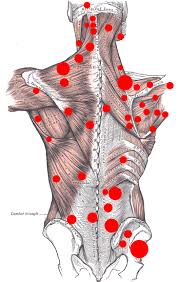
Myofascial pain is a chronic musculoskeletal pain disorder that can involve either a single muscle or a muscle group. It refers to pain and inflammation the body’s soft tissues.  The pain associated with this condition can range from burning, stabbing, or an aching sensations.   With myofascial pain , excessive strain on a particular muscle, muscle group, ligament or tendon can prompt the development of a “trigger point” and that, in turn, causes pain.

The Pros for considering IMS/dry needling:  No down time  |  No side affects  | Immediate results

The Cons for considering IMS/dry needling:  This treatment can be painful   |  “Mentally” tiring if ongoing treatment is required

My official opinion on IMS/dry needling is that it works; and this procedure has helped me regain my mobility and eliminate my pain.  It is a powerful therapy and the number of treatments required depends on 5 factors:

  1. your general health
  2. the duration and extent of your condition
  3. how much scar tissue you have
  4. how quickly your body can heal
  5. how much your body can take before you get tired

For more information about IMS/dry needling please contact Diversified Health Clinic.

*My Journey into IMS/Dry Needling | Part I

*My Journey into IMS/Dry Needling | Part II


November 25, 2013/by Carmen Scott
0 0 Carmen Scott https://www.diversifiedhealth.ca/wp-content/uploads/2026/01/DiversifiedHealth-logo.png Carmen Scott2013-11-25 13:08:482013-11-25 13:08:48My Journey into IMS/Dry Needling | Part III
Guest Bloggers/Articles, Health Information, Physiotherapy

My Journey Into IMS/Dry Needling | Part II

My Journey Into IMS/Dry Needling | Part IIMy research into IMS/dry needling is complete, and I have chosen my health care practitioner – a    physiotherapist  from Diversified Health.

Entering the room on my first visit I was a bit anxious.  Knowing that the treatment can be uncomfortable is like taking Buckley’s cough syrup… you know it will taste horrible, but it works!

My therapist was great, we talked about my health history, why I chose this treatment, and what my expectations of this therapy was.  The therapist explained in great detail what would happen on this first visit and what I should expect after my treatment.

Laying on the table the practitioner felt the area in question, my low back and hips and located numerous trigger points.  A Trigger Point is a hyper-irritable spot within a taut band of skeletal muscle which is painful on compression. These trigger points, sometimes referred to as myofascial pain, can refer pain to other areas and often restrict the flexibility of the affected muscle.  If left untreated, they can create new trigger points.  As we talked about how intense the pain was, she was assessing where to place the needles.

My physiotherapist sterilized the treatment area and removed a needle from a sealed package.  Each sterilized needle comes in an individual sealed package. Because the filament needles are so thin there is virtually no discomfort when the needle is inserted.

As the needle entered the skin and reached the muscle, this is when the muscle contracted and I felt twitching, spasms, and tingling; a potpourri of senses.  As the practitioner moved the needle, I felt a sensation like hitting your funny bone,  weird, tingly and painful, but the whole experience happened in under 4 seconds.

This was repeated numerous times on different areas on my lower back and hips. The therapist worked on one side of my body, and then mirrored the treatment on the other side of my body. The physiotherapist talked to me throughout the treatment and was aware and attentive to my reactions to each treatment.

Each needle felt sightly different, some treatment areas felt achy, hot, a stinging then tightening feeling.  Some areas were extremely painful while others areas I felt very little.  The tighter or more damaged the muscle, the more discomfort you feel.

When the session was over, I found myself physically and mentally tired… not sure if it was because I was so anxious on my first visit or because the treatment was physical.  After resting for about 5 minutes, I got up and spoke with my physiotherapist, who answered all my questions, and gave me a set of exercises to complete at home.  Because of the release of toxins and lactic acid that get held in muscles I was quite tired, and found drinking lots of water after the treatment very helpful.  Two hours after my treatment I felt tired and achy, but nothing that an Advil couldn’t help.

There is absolutely no “down time” with IMS/dry needling.

What happened the next morning was just short of a “miracle”.  For the last several years I have found it strenuous to get up from a sitting position due to super tight muscles and back issues… nothing major, just always found myself  getting “prepared” to get up…tightening my stomach muscles and placing my hands on the chair to help push off.

I was standing in the middle of my living room when I suddenly realized that I had gotten out of my chair without a thought.  This may seem small, but this victory solidified my belief that IMS/dry needling is an outstanding treatment for chronic or acute pain.

Dry needling will not be for everyone, it is at times painful (3 to 4 seconds of pain), but there is no denying my results.  I have booked several more treatments, and will update you on my continued journey into IMS/dry needling in Part III.

October 9, 2013/5 Comments/by Carmen Scott
0 0 Carmen Scott https://www.diversifiedhealth.ca/wp-content/uploads/2026/01/DiversifiedHealth-logo.png Carmen Scott2013-10-09 09:00:592013-10-09 09:00:59My Journey Into IMS/Dry Needling | Part II
Health Information

My Journey Into IMS/Dry Needling | Part I

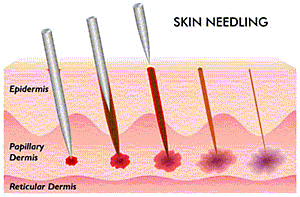
skin-needlingLike many of us, I live a fairly sedentary lifestyle.  Years spent in front of a computer, combined with injuries, and the stress of everyday life is taking a toll on my body.

Over the years I have employed the services of acupuncturists, chiropractors, physiotherapists and massage therapists to alleviate my aches and pains.

A friend suggested that I try dry needling.  I had never heard of this treatment, and so began my research into the science of IMS/ Dry needling.  Dry needling, a relatively new medical treatment option, treats muscle, tendon and other soft tissue injuries.

Dry needling also known as intramuscular stimulation is an invasive procedure in which solid filament needles are inserted into the skin and muscle at a myofascial trigger point in order to cause a small, specific injury or “wound” in the tissue.  This injury or wound signals the brain to begin to repair the damaged tissue with new healthy tissue.  Placing a needle in a muscular knot or painful trigger point will provokes a “twitch” response from the muscle. Once a “twitch” response has been elicited, the muscle fibers in that area begin to heal. The area around the muscle will relax and will start to lengthen, the inflammation will start to reduced and circulation and blood flow will increase.

Dry needling is characterized as a painful treatment. The more chronic the tigger point or muscle knot the more painful the treatment…healthy muscle tissue will not “twitch” when stimulated by a needle, and therefore will not be painful.

According to a report from the American Academy of Orthopedic Manual Physical Therapists:  “Research supports that dry needling improves pain control, reduces muscle tension, normalizes biochemical and electrical dysfunction of motor endplates, and facilitates an accelerated return to active rehabilitation”.

I have booked my first appointment, and am curious to find out how painful this treatment is, what it will feel like and what the results will be.

Keep an eye out for Part II of my journey into IMS/Dry Needling!

September 9, 2013/by Carmen Scott
0 0 Carmen Scott https://www.diversifiedhealth.ca/wp-content/uploads/2026/01/DiversifiedHealth-logo.png Carmen Scott2013-09-09 11:53:342013-09-09 11:53:34My Journey Into IMS/Dry Needling | Part I
Guest Bloggers/Articles, Physiotherapy

What is Dry Needling or IMS physiotherapy?

Dry Needling or IMS | physiotherapy victoria bcTrigger point dry needling, also referred to as intramuscular stimulation (IMS) and/or intramuscular therapy (IMT) is an invasive procedure in which an acupuncture needle is inserted into the skin and muscle. 

It’s actually considered part of physiotherapy, and is not acupuncture.

IMT treatments at Diversified. Read more about here.

What is Trigger Point Dry Needling?

Trigger point dry needling is physical intervention that uses dry needles to stimulate trigger points, diagnose and treat neuromuscular pain and functional movement deficits. 1

As the name implies, dry needling is primarily directed at myofascial trigger points, which are defined as “hyperirritable spots in skeletal muscle that are associated with a hypersensitive palpable point in a taut band”.2

Physical therapists around the world practice trigger point dry needling as part of their clinical practice and use the technique in combination with other physical therapy interventions.  A high degree of kinaesthetic perception allows a physical therapist to use the needle as a palpation tool and appreciate differences in the density of those tissues pierced by the needle.3

Although some people refer to trigger point dry needling as a form of acupuncture, it did not originate as part of the practice of traditional Chinese acupuncture. The difference being that there are distinct anatomical locations of myofascial trigger points within muscle tissue, whereas acupuncture points have point specificity on the body.

There is substantial medical literature on IMS and dry needling that has been subjected to peer review. Trigger point dry needling has been used following a variety of different schools and conceptual models.  According to these models, when the flow of nerve impulses is restricted to an area of the body, all innervated structures, including muscle, spinal nerves, sympathetic ganglia, adrenal glands, sweat cells, and brain cells become atrophic, irritable, and supersensitive.4,5

Many common diagnoses, such as achilles tendonitis, lateral epicondylitis, frozen shoulder, chrondromalacia patellae, headaches, plantar fasciitis, temporomandibular joint (TMJ) dysfunction, myofascial pain syndrome (MPS), and others, might in fact be the result of neuropathy, and associated myofascial trigger points.4

Intramuscular therapy has been very successful for patients with chronic low back pain and sciatica symptoms. Shortening of the paraspinal muscles, particularly the multifidi muscles, can lead to disc compression, narrowing of the intervertebral foramina, and/or cause direct pressure on the nerve root, which subsequently would result in peripheral neuropathy and compression of super sensitive pain receptors, resulting in pain and dysfunction. 4,5

In layman’s terms, the treatment uses acupuncture needles, to target specific muscles that have contracted and become shortened. These shortened muscles compress and irritate the nerves. This treatment can greatly reduce tightness and pain, while increasing flexibility and range of motion.

The treatment involves dry needling of affected areas of the body without injecting any substance. The needle sites can be targeted at the site of taut, painful muscle bands, and/or can be near the spine where the nerve root may have become irritated and super-sensitive.

An important note is needling  of a normal muscle is painless. In contrast a shortened, muscle will ‘grasp’ the needle and produces a  cramping sensation. Intramuscular dry needling can reduce pain and soften these trigger points, while increasing flexibility and range of motion.

  1. 1.Dommerholt J, Mayoral del Moral O, Grobly C.  Trigger point dry needling. The Journal of Manual & Manipulative Therapy 2006; 14(4): E70-87.
  2. Simons DG, Travell JG, Simons LS. Travell and Simons’ Myofascial Pain and Dysfunction: The Trigger Point Manual. Vol 1. 2nd ed. Baltimore, MD: Williams & Wilkins, 1999.
  3. Mayoral del Moral O. Fisioterapia invasiva del sindrome de dolor myofascial [Spanish; Invasive physical therapy for myofascial pain syndrome]. Fisioterapia 2005;27(2):69-75.
  4. Gunn CC. Radiculopathic pain: Diagnosis, treatment of segmental irritation or sensitization. J Musculoskeletal Pain 1997;5(4):119-134.
  5. 5.  Cannon WB, Rosenblueth A. The Supersensitivity of Denervated Structures: A Law of Denervation. New York, NY: MacMillan, 1949.


September 4, 2012/by Diversified Health Clinic
https://www.diversifiedhealth.ca/wp-content/uploads/2026/01/DiversifiedHealth-logo.png 0 0 Diversified Health Clinic https://www.diversifiedhealth.ca/wp-content/uploads/2026/01/DiversifiedHealth-logo.png Diversified Health Clinic2012-09-04 06:15:202012-09-04 06:15:20What is Dry Needling or IMS physiotherapy?

Search our Blog

Search Search

Topics of Interest

Acupuncture Back Pain Chronic Back Pain Chronic Pain Custom Orthotics Diversified Health Clinic Victoria BC Dry Needling eToims exercise fitness Foot pain GoodLife Fitness Victoria Marathon Headaches Health Care Victoria Health Tips Healthy lifestyle Immune System IMS Inflammation Joint Pain Knee Injuries Low Back Pain Marathons Migraines natural health practitioner orthotics Pain management Pain Relief Physiotherapy physiotherapy victoria bc Plantar fasciitis Registered Massage Therapist Registered Massage Therapy Runner's knee Running Seasonal Allergies Skin Cancer Spinal Decompression Sports Injuries Stress Stretches Sunscreen Victoria therapeutic massage Vitamins walking

Categories

  • Acupuncture
  • Athletic Therapy
  • Careers
  • Chiropractic Care
  • Events
  • Exercise Library
  • Fitness
  • Guest Bloggers/Articles
  • Health Information
  • Massage Therapy
  • News
  • Orthotics
  • Physiotherapy
  • Practitioners in Focus
  • Uncategorized
  • Victoria Healthcare News
  • Video Library

Archive

News & Events

  • How to Heal Your Pelvic Floor After Giving Birth | Pelvic Floor Physiotherapy Guide July 30, 2026
  • About Matthew Bryan, DC November 7, 2025
  • The Benefits of Shockwave Therapy Treatments February 28, 2023
  • Piriformis Syndrome: A Real Pain in the Butt January 31, 2023
  • Searching for a Personal Trainer in Victoria to Help You Achieve Your Goals? December 31, 2022
  • Are Winter Blues + Holiday Stress Making You Feel Grinchy?  November 28, 2022
  • Fact or Fiction? Is Joint Pain Worse in Cold Weather? October 28, 2022

patients choice winner

A Victoria, BC Chiropractor winner of the Patients’ Choice Awards.Verified by Opencare.com

Diversified Health Clinic

The Mosaic Building
1063 Fort St, Victoria, BC
V8V 3K5, Canada
250-382-0018
Monday7 a.m. – 7 p.m.
Tuesday7 a.m. – 7 p.m.
Wednesday7 a.m. – 7 p.m.
Thursday7 a.m. – 7 p.m.
Friday7 a.m. – 7 p.m.
Saturday9 a.m. – 4 p.m.
SundayBy Appointment
© Copyright - Diversified Health Clinic. Website by Victoria's iDreamDigital.
  • Link to Facebook
  • Link to Instagram
  • Link to X
  • Link to Youtube
  • Link to Rss this site
  • Link to Mail
Scroll to top Scroll to top Scroll to top

Would you like to learn more about our COVID-19 Protocols?

Our ProtocolsDismiss

Cookie and Privacy Settings


How we use cookies

We may request cookies to be set on your device. We use cookies to let us know when you visit our websites, how you interact with us, to enrich your user experience, and to customize your relationship with our website.

Click on the different category headings to find out more. You can also change some of your preferences. Note that blocking some types of cookies may impact your experience on our websites and the services we are able to offer.

Essential Website Cookies

These cookies are strictly necessary to provide you with services available through our website and to use some of its features.

Because these cookies are strictly necessary to deliver the website, refusing them will have impact how our site functions. You always can block or delete cookies by changing your browser settings and force blocking all cookies on this website. But this will always prompt you to accept/refuse cookies when revisiting our site.

We fully respect if you want to refuse cookies but to avoid asking you again and again kindly allow us to store a cookie for that. You are free to opt out any time or opt in for other cookies to get a better experience. If you refuse cookies we will remove all set cookies in our domain.

We provide you with a list of stored cookies on your computer in our domain so you can check what we stored. Due to security reasons we are not able to show or modify cookies from other domains. You can check these in your browser security settings.

Google Analytics Cookies

These cookies collect information that is used either in aggregate form to help us understand how our website is being used or how effective our marketing campaigns are, or to help us customize our website and application for you in order to enhance your experience.

If you do not want that we track your visit to our site you can disable tracking in your browser here:

Other external services

We also use different external services like Google Webfonts, Google Maps, and external Video providers. Since these providers may collect personal data like your IP address we allow you to block them here. Please be aware that this might heavily reduce the functionality and appearance of our site. Changes will take effect once you reload the page.

Google Webfont Settings:

Google Map Settings:

Google reCaptcha Settings:

Vimeo and Youtube video embeds:

Other cookies

The following cookies are also needed - You can choose if you want to allow them:

Privacy Policy

You can read about our cookies and privacy settings in detail on our Privacy Policy Page.

Privacy Policy
Accept settingsHide notification only