
Injury Recovery in Greater Victoria, BC - Call us to book an appointment: (250) 382-0018
Diversified Health Clinic
  • Welcome
  • Meet our Team
    • Chiropractic
      • Dr. Matthew Bryan DC
      • Dr. Tessa Bryan DC
      • Dr. Krisjan Gustavson DC
      • Dr. Alexia Grelson DC
    • Physiotherapy
      • Spirit Donahue MPT
      • Kanu Priya MPT
      • Ivy Elling-Quaintance MPT
    • Registered Massage Therapy
      • Morag Hart RMT
      • Craig Lawrence RMT
      • McKenzie Connell RMT
      • Braedan Pearce RMT
    • Acupuncture
      • Annie Wang R.Ac R.TCM.P
      • Lauren Ching R.Ac
      • Rebecca Thompson R.Ac R.TCM.P
      • Jun Liu R.Ac
    • Kinesiology / Personal Training
      • Angelina Schaaf BCAK
      • Christian Schwarz BCAK
    • Medical Doctor
      • Dr. Ian Hyams MD
      • Jennifer Blum, EMSELLA
    • Clinical Counsellor
      • Laura Grohovac CCC
    • .
  • About
    • Our Clinic
    • Careers
  • Disciplines
    • Disciplines
      • Chiropractic
      • Physiotherapy
      • Registered Massage Therapy
      • Kinesiology
      • Acupuncture
      • Clinical Counselling
      • Medical Doctor
      • Personal Training
    • Treatments
      • Shockwave Therapy
      • Spinal Decompression
      • IMS (Intramuscular Stimulation)
      • Pelvic Floor Physiotherapy
      • EMSELLA
      • Class IV K Laser Therapy
      • Orthotics
      • eToims Needle-less IMS
  • Conditions
    • Plantar Fasciitis
    • Running Injuries
    • Allergies
    • Concussion Treatment
    • Bursitis
    • Tennis Elbow
    • TMJ Disorder
    • Automobile Collisions
    • Nerve Pain with Sciatica
    • Sport Injuries
    • Stress
    • Runner’s Knee
    • Vertigo & Vestibular Rehab
    • Concussions
  • Pricing
  • News & Events
    • News
    • Events
    • Practitioners In Focus
    • Exercise Library
  • Contact
  • ICBC Claims
  • Book Now!
  • News
  • Menu Menu
  • Link to Facebook
  • Link to Instagram
  • Link to X
  • Link to Youtube
  • Link to Rss this site
  • Link to Mail
  • Welcome
  • About
    • Meet our Team
    • Our Clinic
    • Careers
  • Disciplines
  • Conditions
  • Pricing
  • News
    • News & Advice
    • Practitioners In Focus
  • Contact
  • ICBC Claims
  • Book Now!

Tag Archive for: Sun Safety

Guest Bloggers/Articles

What Can Protect Me From UV Rays Other Than Sunscreen?

You can be in the sun without sunscreen for up to 20 minutes a day.  This is extremely variable depending on your genetics. The darker and thicker your skin, the longer the sun exposure needed to start sun radiation damage. For freckling individuals, sun exposure may cause damage very quickly, even in less than 5 minutes. This is why it is very important to protect your skin with sunblock when you are outside.  But what if you don’t want to use sunscreen… What other protection can I use?

Wear Sunglasses

Sunglasses protect the sensitive skin around the eyes and also helps to prevent cataracts. The best sunglasses block 99 to 100% of UVA and UVB rays. Wrap-around sunglasses and styles that fit close to the eye are especially good because they prevent the sun’s rays from coming in through the sides.

Wear a Hat

A tightly woven hat with a 4-inch brim all the way around, helps shade your face, ears, and the back of your neck. Baseball caps leave your ears and neck exposed.

Wear Appropriate Clothing

This means long-sleeve shirts, and long pants. The colour of the fabric can also make a difference; as a general rule, lighter coloured fabrics let more UV rays through than darker coloured fabrics. Also the tighter the weave, and the thicker the fabric, and the better the clothing is at blocking  UV rays.

Fabric Matters in Regular Clothing

Nylon – highly effective protection, Watch out for “stretchy” fabric – clothing that the weave expands when the material stretches, will let in more UV rays, so the correct fit is very important in elastic clothing.

Wool – moderately effective

Silk – moderately effective

Cotton, rayon, and hemp – least effective (unless chemically treated)

Denim (heavy weight) – superior protection

Lightweight cotton jersey knit, typical of T-shirt fabrics: SPF 4 (white) / 18 (dyed blue).
Heavy cotton twill – 8 oz. denim: SPF 12 (white) / 100 (dyed blue). Blue jeans eliminate 100% UV rays

Buy dark coloured clothing with tight-knit weaves or clothing with UPF.

UPF Clothing

The UPF rating is to clothing what the SPF rating is to sunscreen. The UPF rating is applied to textiles that protect your skin from the sun.  SPF measures only how much UVB is blocked, but not UVA (unless it is labeled “broad spectrum”). UPF clothing blocks both types of damaging rays.

UPF clothing either blocks or absorbs UV radiation to protect your skin.  The UPF rating is based on a fabric’s content, weight, color, and construction.

UPF rating for clothing:

15 to 24 – Good
25 to 39 – Very Good
40 to 50 – Excellent
It’s best to choose clothing with a UPF rating of 30 or higher; UPF 50 blocks 98 percent of UV rays.

Whether you buy UPF clothing, or wear what you have in your closet, make sure that you are protected from the suns damaging rays.

June 15, 2017/by Carmen Scott
0 0 Carmen Scott https://www.diversifiedhealth.ca/wp-content/uploads/2026/01/DiversifiedHealth-logo.png Carmen Scott2017-06-15 10:27:122017-06-15 10:27:12What Can Protect Me From UV Rays Other Than Sunscreen?
Health Information

Lens Color and Sun Safety

imageWhen talking about sun safety, we talk primarily about the skin, however, protecting your eyes from the damaging rays of the sun is just as important as applying sunscreen.

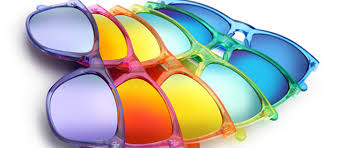
Lens colors affect how much visible light reaches your eyes, so it is important to know which colour lenses would be right for you.

Make sure your lenses are dark enough to keep your eyes comfortable, and that you wear your sunglasses every time you go outside.  Just like wearing sun screen, wearing sunglasses needs be part of your lifestyle.

Dark Colour Lenses: Brown, Gray & Green

These colour lenses are great for everyday use and outdoor activities. Darker shades are intended to cut through the glare and reduce eyestrain in moderate-to-bright conditions.  Darker colour lenses limit colour distortion.

Dark colour lenses are great for general daily use, and provide true colour perception, and aid in preventing eye fatigue during outdoor activities, where glare is not an issue.

Light Colour Lenses: Gold, Yellow, Amber, Red & Rose:

These colors excel in moderate to low light conditions.  They provide excellent depth perception, enhance contrasts, improve the visibility of objects and make your surroundings appear brighter.

Light colour lenses  are great enhancers for vision by giving you high contrast, enhanced depth perception, and reduced glare. They are helpful for any sport where distance needs to be judged such as golf or racquet sports.

Here is a quick colour break down to help decided what colour lenses are best for you:

The basic rule of thumb for choosing a lens is to consider color opposites. Blue is opposite of Yellow and Red is opposite of Green. Red lenses will absorb Green light and Yellow Lenses will absorb Blue/Ultraviolet light, and vice versa.

Green – green lenses work the same in any light conditions, so can be used for any outdoor activity.  Green tints reduce glare, while offering high contrast and visual sharpness.

  • Good for general purpose use
  • Offers even color perception
  • Dims glare while brightening shadows
  • Provides good contrast for low-light conditions

Gray – Gray is a popular neutral tint that allows the eyes to perceive colors in its purest form. Gray tints reduce brightness and glare. Choose gray for driving and outdoor sports.

  • Good for general purpose use
  • Reduces eye fatigue
  • Provides true color perception
  • Minimizes glare, especially off water

Brown / Amber – These lenses are great for activities like tennis, golf or other sports where distance is a factor and must be calculated.  Brown tints reduce glare and block blue light, giving them the ability to brighten vision on cloudy days.

  • Good for variable conditions
  • Enhances contrast
  • Improve depth perception

Yellow/Orange – Yellow and orange tints increase contrast in low-light conditions. These tints tend to make objects appear sharper both indoors and outdoors.

• Filters out hazy light that is hard on the eyes
• Good for using at Dawn and Dusk
•Provides greater clarity in fog, haze, and other low-light conditions

Pink and Red – These colours provide better visibility on the road, by improving visual depth & reducing eye strain.

  • Provides good road visibility
  • Offers greatest amount of contrast

Blue and Purple –   These colours block the glare from visible white light. Useful for outdoor sports,  such as snowboarding, biking, or sailing.

  • Helps define contours
  • Reduces glare
  • Enhances color perception

What ever colour choice you pick, remember the most important thing is to wear your sunglasses!

May 30, 2016/by Carmen Scott
0 0 Carmen Scott https://www.diversifiedhealth.ca/wp-content/uploads/2026/01/DiversifiedHealth-logo.png Carmen Scott2016-05-30 12:28:202016-05-30 12:28:20Lens Color and Sun Safety
Health Information

Facts You Should Know About Sun Safety

SunSafety8If you spend any time out in the sun, you should familiarize yourself with these sun safety facts.

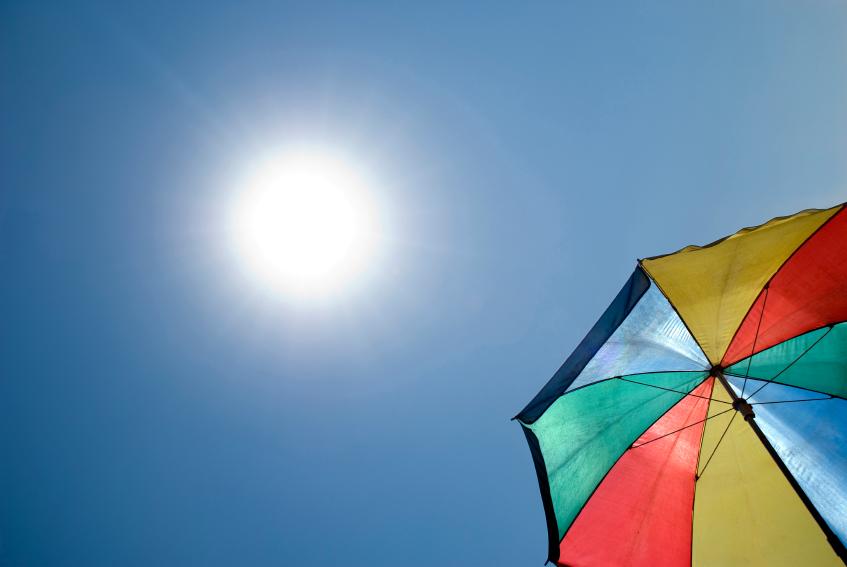
 – More and more folks are adding umbrellas to their must haves for a day at the park or beach.  Umbrellas can be deceiving by making you think that you’re safer than you really are. Up to 80 percent of UV rays can bounce off reflective surfaces such as sand, concrete and water, and reach you under the umbrella. Regardless of where you are outside… use sunscreen!

 – Many medication, including some antibiotics, birth control pills, and antihistamines can make you sun sensitive. Always read the information sheet that comes with your prescription to see if the medication has a warning about sun sensitivity.

– Use the “shadow rule” as an easy way to help you gauge the strength of the sun.  If your shadow is shorter than you, that means that the sun is at its strongest, as well as the UV index. On average the strongest time for the sun is between 11:00am – 2:00pm.

– Don’t forget to use sunscreen on small body parts. We often concentrate on arms, legs and backs, but forget places like ears, fingers, toes, back of the neck, and back of the knees. Heads need protection too, so wear a wide brimmed hat to help protect your scalp.

– Sunglasses protect your eyes and the delicate skin around your eyes from serious sun-damage, including eye diseases, cataracts and skin cancer. Make sure the sunglasses you pick are close-fitting and that they offer 99-100% UV protection.

– Even when it’s cloudy outside, you need to wear sunscreen. UVA and UVB rays are not filtered by the clouds or by shade – allowing about 80% of the damaging rays to reach the earth. When outside, always where sunscreen.

– Waterproof sunscreens and water-resistant sunscreens are different. On average water-resistant sunscreen gives you about 40 minutes of sun protection in the water, while waterproof sunscreen provides about 80 minutes. Regardless of which type of sunscreen you use, always re-apply after swimming.

– Don’t wait to apply your sunscreen till you have reached your destination. It takes about 15 to 30 minutes for sunscreen to sink into your skin and start working, so always apply sunscreen before you leave your home.

– The average life expectancy of a bottle of sunscreen – according to the expiration date is 2 years.  However, sunscreens are often exposed to extreme heat, cold, and tops can be left open which can allow bacteria to enter the bottle which can destabilize the formula. To be safe, purchase new sunscreen every year.

– You can use clothing for sunscreen, but do your homework. A white cotton t-shirt provides an SPF of approximately 5 to 7, while a dark denim shirt with long sleeves can provide 100% protection. A good test is to hold your piece of clothing up to a light or window; if a large amount of light comes through the clothing, it won’t provide adequate protection. Consider hi-tech sun-protective clothing and accessories; many of them have a UPF rating (Ultraviolet Protection Factor) of 50 or higher.

So the next time you head outdoors, make sure you follow these sun safety rules.

June 18, 2015/by Carmen Scott
0 0 Carmen Scott https://www.diversifiedhealth.ca/wp-content/uploads/2026/01/DiversifiedHealth-logo.png Carmen Scott2015-06-18 12:27:192015-06-18 12:27:19Facts You Should Know About Sun Safety

Search our Blog

Search Search

Topics of Interest

Acupuncture Back Pain Chronic Back Pain Chronic Pain Custom Orthotics Diversified Health Clinic Victoria BC Dry Needling eToims exercise fitness Foot pain GoodLife Fitness Victoria Marathon Headaches Health Care Victoria Health Tips Healthy lifestyle Immune System IMS Inflammation Joint Pain Knee Injuries Low Back Pain Marathons Migraines natural health practitioner orthotics Pain management Pain Relief Physiotherapy physiotherapy victoria bc Plantar fasciitis Registered Massage Therapist Registered Massage Therapy Runner's knee Running Seasonal Allergies Skin Cancer Spinal Decompression Sports Injuries Stress Stretches Sunscreen Victoria therapeutic massage Vitamins walking

Categories

  • Acupuncture
  • Athletic Therapy
  • Careers
  • Chiropractic Care
  • Events
  • Exercise Library
  • Fitness
  • Guest Bloggers/Articles
  • Health Information
  • Massage Therapy
  • News
  • Orthotics
  • Physiotherapy
  • Practitioners in Focus
  • Uncategorized
  • Victoria Healthcare News
  • Video Library

Archive

News & Events

  • How to Heal Your Pelvic Floor After Giving Birth | Pelvic Floor Physiotherapy Guide July 30, 2026
  • About Matthew Bryan, DC November 7, 2025
  • The Benefits of Shockwave Therapy Treatments February 28, 2023
  • Piriformis Syndrome: A Real Pain in the Butt January 31, 2023
  • Searching for a Personal Trainer in Victoria to Help You Achieve Your Goals? December 31, 2022
  • Are Winter Blues + Holiday Stress Making You Feel Grinchy?  November 28, 2022
  • Fact or Fiction? Is Joint Pain Worse in Cold Weather? October 28, 2022

patients choice winner

A Victoria, BC Chiropractor winner of the Patients’ Choice Awards.Verified by Opencare.com

Diversified Health Clinic

The Mosaic Building
1063 Fort St, Victoria, BC
V8V 3K5, Canada
250-382-0018
Monday7 a.m. – 7 p.m.
Tuesday7 a.m. – 7 p.m.
Wednesday7 a.m. – 7 p.m.
Thursday7 a.m. – 7 p.m.
Friday7 a.m. – 7 p.m.
Saturday9 a.m. – 4 p.m.
SundayBy Appointment
© Copyright - Diversified Health Clinic. Website by Victoria's iDreamDigital.
  • Link to Facebook
  • Link to Instagram
  • Link to X
  • Link to Youtube
  • Link to Rss this site
  • Link to Mail
Scroll to top Scroll to top Scroll to top

Would you like to learn more about our COVID-19 Protocols?

Our ProtocolsDismiss

Cookie and Privacy Settings


How we use cookies

We may request cookies to be set on your device. We use cookies to let us know when you visit our websites, how you interact with us, to enrich your user experience, and to customize your relationship with our website.

Click on the different category headings to find out more. You can also change some of your preferences. Note that blocking some types of cookies may impact your experience on our websites and the services we are able to offer.

Essential Website Cookies

These cookies are strictly necessary to provide you with services available through our website and to use some of its features.

Because these cookies are strictly necessary to deliver the website, refusing them will have impact how our site functions. You always can block or delete cookies by changing your browser settings and force blocking all cookies on this website. But this will always prompt you to accept/refuse cookies when revisiting our site.

We fully respect if you want to refuse cookies but to avoid asking you again and again kindly allow us to store a cookie for that. You are free to opt out any time or opt in for other cookies to get a better experience. If you refuse cookies we will remove all set cookies in our domain.

We provide you with a list of stored cookies on your computer in our domain so you can check what we stored. Due to security reasons we are not able to show or modify cookies from other domains. You can check these in your browser security settings.

Google Analytics Cookies

These cookies collect information that is used either in aggregate form to help us understand how our website is being used or how effective our marketing campaigns are, or to help us customize our website and application for you in order to enhance your experience.

If you do not want that we track your visit to our site you can disable tracking in your browser here:

Other external services

We also use different external services like Google Webfonts, Google Maps, and external Video providers. Since these providers may collect personal data like your IP address we allow you to block them here. Please be aware that this might heavily reduce the functionality and appearance of our site. Changes will take effect once you reload the page.

Google Webfont Settings:

Google Map Settings:

Google reCaptcha Settings:

Vimeo and Youtube video embeds:

Other cookies

The following cookies are also needed - You can choose if you want to allow them:

Privacy Policy

You can read about our cookies and privacy settings in detail on our Privacy Policy Page.

Privacy Policy
Accept settingsHide notification only