Injury Recovery in Greater Victoria, BC - Call us to book an appointment: (250) 382-0018
Diversified Health Clinic
  • Welcome
  • About
    • Meet our Team
      • Dr. Matthew Bryan DC
      • Dr. Tessa Bryan DC
      • Dr. Krisjan Gustavson DC
      • Dr. Alexia Grelson DC
      • Dr. Ian Hyams MD
      • Kanu Priya, (MPT)
      • Spirit Donahue MPT
      • Morag Hart RMT
      • Craig Lawrence RMT
      • McKenzie Connell RMT
      • Braedan Pearce RMT
      • Angelina Schaaf BCAK
      • Christian Schwarz BCAK
      • Annie Wang R.Ac, R.TCM.P
      • Rebecca Thompson, R.Ac, R.TCM.P
      • Lauren Ching R.Ac
      • Laura Grohovac CCC
    • Our Clinic
    • Careers
  • Disciplines
    • Disciplines
      • Chiropractic
      • Physiotherapy
      • Registered Massage Therapy
      • Kinesiology
      • Acupuncture
      • Clinical Counselling
      • Personal Training
    • Treatments
      • Spinal Decompression
      • Shockwave
      • Class IV K Laser
      • eToims Needle-less IMS
      • Orthotics
      • Pelvic Floor Physiotherapy
  • Conditions
    • Plantar Fasciitis
    • Running Injuries
    • Allergies
    • Concussion Treatment
    • Bursitis
    • Tennis Elbow
    • TMJ Disorder
    • Automobile Collisions
    • Nerve Pain with Sciatica
    • Sport Injuries
    • Stress
    • Runner’s Knee
    • Vertigo & Vestibular Rehab
    • Concussions
  • Pricing
  • News & Events
    • News
    • Events
    • Practitioners In Focus
    • Exercise Library
  • Contact
  • ICBC Claims
  • Book Now!
  • News
  • Menu Menu
  • Link to Facebook
  • Link to Instagram
  • Link to X
  • Link to Youtube
  • Link to Rss this site
  • Link to Mail
  • Welcome
  • About
    • Meet our Team
    • Our Clinic
    • Careers
  • Disciplines
  • Conditions
  • Pricing
  • News
    • News & Advice
    • Practitioners In Focus
  • Contact
  • ICBC Claims
  • Book Now!
Chiropractic Care

Is Shockwave Therapy Right For Me?

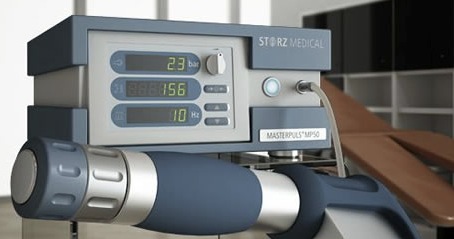
shockwave therapyShockwave Therapy is a non-surgical treatment of soft tissue, bone, and joint pain.  Shockwave treatments send high-energy mechanical pulses to an injured area. These high-energy mechanical pulses stimulate the breakdown of scar tissue, improves blood circulation, and decreases inflammation; which helps speed up healing and recovery times.

Shockwave therapy can help in the treatment of:

Heel spurs / Plantar fasciitis / achilles tendonitis / Tennis elbow / chronic muscular pain / Bursitis / Patellar tendonitis / Jumpers knee / Stress fractures /Lumbar & cervical spine injuries

During a Shockwave  treatment, a high-intensity sound wave interacts with the tissues of the body, effectively reinjuring the area on a cellular level and breaking up scarring that has penetrated tendons and ligaments.  The controlled reinjuring of tissue allows the body to regenerate blood vessels and bone cells.  The resulting revascularization leads to faster healing, reversal of chronic inflammation, stimulation of collagen and a return to pre-injury activity levels.

Shockwave therapy enhances the healing process, fights inflammation, and eliminates pain by:

  • Extracorporeal Shockwave Therapy (ESWT) sending high-energy mechanical pulses to the treatment area.
  • These high-energy mechanical pulses stimulate the breakdown of scar tissue and fibroblasts in the targeted area thus improving blood circulation in the area
  • These pulses also initiate metabolic activity and an inflammatory response that promotes and stimulates healing.

Shockwave Therapy is particularly good at pain management by stimulating a metabolic reaction in the affected tissue, which induces an analgesic reaction which blocks pain messages.  Shockwave therapy also stimulates the production of collagen. These newly created collagen fibers become more dense and stiff and creates a firmer and stronger structure.

Shockwave therapy increases blood circulation,  promotes and accelerates the recovery of injured tissue and stimulates the body’s repair mechanisms, with damaged tissue gradually regenerating and eventually healing.

To find out more about Shockwave therapy, please contact our health care practitioners at 250-382-0018.

March 28, 2016/1 Comment/by Carmen Scott
0 0 Carmen Scott https://www.diversifiedhealth.ca/wp-content/uploads/2026/01/DiversifiedHealth-logo.png Carmen Scott2016-03-28 09:33:262016-03-28 09:33:26Is Shockwave Therapy Right For Me?
Guest Bloggers/Articles

What are the benefits of walking?

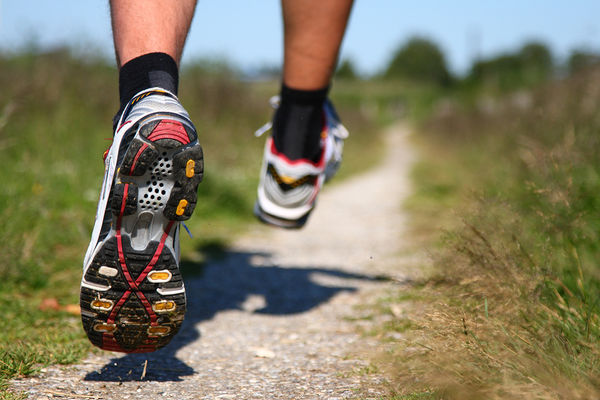
bigstockphoto_running_5360616.s600x600Article by The Registered Massage Therapists’ Association of British Columbia. 

Walking, what is it?

Walking is easy on the joints and gets your heart pumping. It’s easy to do, inside or outside and costs almost nothing.

What are the benefits of walking?

  • Improves cardiovascular fitness by strengthening your heart
  • Improves bone health
  • Lower risk of Type 2 diabetes and heart disease
  • Reduce stress and symptoms of depression
  • Improves physical ability and reduces risk of physical disability in older adults

Who should/can do it?

  • Walking is great for any age and any skill level!

How to do it safely?

  • Proper footwear is a must!
  • Invest in a walking or running shoes with good ankle and arch support and a cushioned sole.

How often can you/should you do it?

  • Brisk walking counts as a moderate intensity activity. It should make you feel warm and slightly winded, and increase you heart rate.
  • Follow the Canadian Physical Activity Guidelines. Aim for 150 minutes or more each week of moderate to vigourous intensity activity if you are an adult, or 60 minutes a day if you are under 18 years of age.
  • You can accumulate 150 minutes per week or 60 minutes daily by doing 10 to 15 min intervals of brisk walking a day.

Goal Setting

  • Work up from a low intensity to higher intensity by increasing your stride length and your speed.
  • Start out at your normal walking pace and gradually increase the amount of time that you walk, the speed at which you walk, or both on a daily or weekly basis.
  • Every try speed walking? A good walking speed is 4.5-6.5 km per hour (2-4mph). Once you hit 6.5 km/h, it gets more difficult because it feels like you should probably turn it into a run. Doing a proper speed walk can help at higher speeds.
March 24, 2016/by Diversified Health Clinic
0 0 Diversified Health Clinic https://www.diversifiedhealth.ca/wp-content/uploads/2026/01/DiversifiedHealth-logo.png Diversified Health Clinic2016-03-24 12:06:122016-03-24 12:06:12What are the benefits of walking?
Guest Bloggers/Articles

7 Signs You Need Acupuncture This Spring

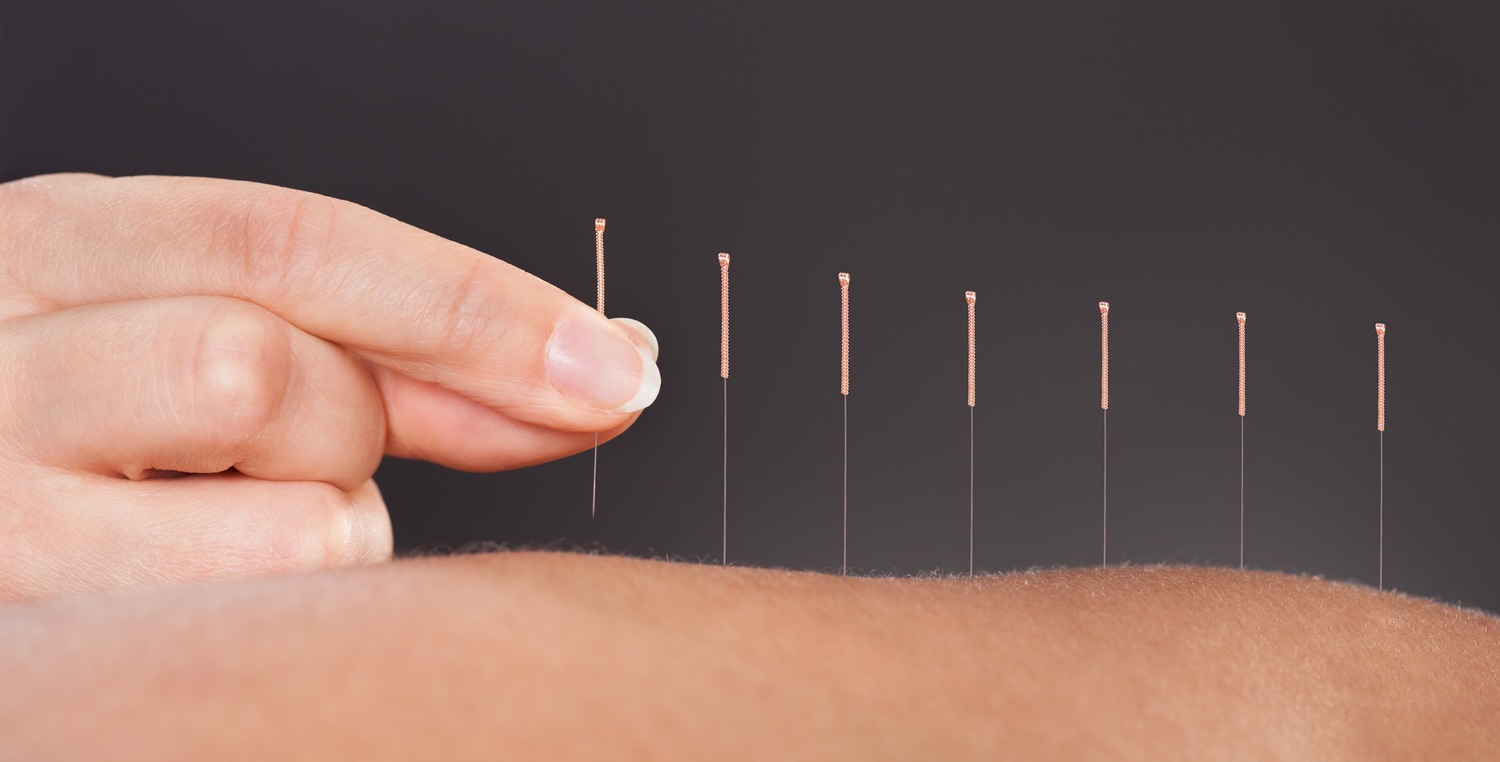
acupunctureWritten by Sara Calabro

Spring is here! Yes! Except for the fact that many people don’t feel so hot this time of year.

The flu is—knock on wood—mostly behind us.  Allergies have not quite exploded yet. So, why do so many of us feel off in the early days of spring?

You can kindly thank your Liver!

In acupuncture theory, humans are viewed as microcosms of the natural world that surrounds them. Seasons—particularly the transitional periods, when we move from one season to the next—factor significantly into how we feel.

Each season is linked with an organ system in the body, and spring’s system is Liver. This means that the Liver, as it adjusts to taking over the seasonal reigns, is especially vulnerable.

When the Liver is vulnerable, the functions throughout the body for which the Liver is responsible have a tendency to get out of whack.

Eventually, spring can become a time when the Liver and its associated functions thrive. However, during this transitional period, when the Liver is still finding its footing, certain symptoms commonly show up. Acupuncture improves these symptoms by restoring balance to the Liver system.

Here are seven signs that your Liver may need some acupuncture love:

You feel extra tense

In acupuncture, Liver is the system that’s responsible for smooth flow throughout the body. When the Liver is not functioning optimally, things like emotional stress, rigid posture, shallow breathing, and jaw clenching may become exacerbated.

You have headaches and other aches and pains

When things aren’t flowing smoothly, we start to experience what acupuncturists think of as stagnation-type symptoms. These include pain, and specifically pain that feels like pressure, tightness or restriction. Tension headaches and menstrual cramps are commonly worse this time of year.

Your muscles are really stiff

The Liver and its associated system, Gallbladder, nourish the body’s connective tissue, tendons and ligaments. You may notice increased stiffness, tension or tightness in your muscles and joints in the coming weeks.

You feel irritable and frustrated

Are you feeling more annoyed than charmed by the springtime sound of chirping birds? The emotional symptoms associated with Liver imbalances mimic the physical stagnation that happens. You may notice yourself feeling extra irritable or frustrated, perhaps more easily annoyed. There’s an emotional stuckness that can take hold in spring.

Your fuse is shorter than usual

All organ systems in acupuncture have an associated emotion. Liver’s emotion is anger. A healthy dose of anger helps complete a balanced emotional profile. However, when the Liver isn’t appropriately keeping things in check, there is a tendency for anger to rise up. Along with feeling irritable, you may have a harder time than usual controlling your anger.

Your digestion is messed up

Healthy digestion is heavily dependent on consistent and smooth movement throughout the whole body. When the Liver fails to maintain flow, digestive disturbances can easily occur. There’s also the whole brain-gut connection. When emotional stress is higher than usual, digestive function naturally declines.

To read the complete article – click here.

March 21, 2016/by Diversified Health Clinic
0 0 Diversified Health Clinic https://www.diversifiedhealth.ca/wp-content/uploads/2026/01/DiversifiedHealth-logo.png Diversified Health Clinic2016-03-21 11:53:172016-03-21 11:53:177 Signs You Need Acupuncture This Spring
Chiropractic Care, Health Information, Physiotherapy

What is Laser Therapy?

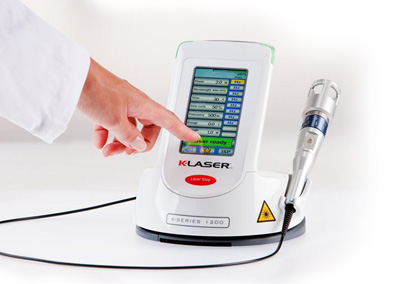
klaserLaser therapy is a non-invasive medical treatment that uses a specific type of light that is turned into very specific wavelengths. Laser stands for: Light Amplification by Stimulated Emission of Radiation.

This type of laser therapy utilizes red infrared light on areas of injury or wounds in order to mend the soft tissue and give relief from acute and chronic pain.

Photons (a particle that carries energy proportional to the radiation frequency) of light energy are absorbed by the injured cells, and transformed into biochemical energy within those cells. This converted energy increases the production of new proteins needed for cellular repair.

Lasers modalities are classified according to their power output:

  • Class 3b—maximum of 500 milliwatts/0.5 watts
  • Class 4—anything over 500 milliwatts/0.5 watts

Power is a crucial factor when it comes to laser therapy. Power is measured in watts. A higher-powered laser is a brighter light, and  can produce more energy per unit of time. When it comes to doing laser therapy treatment, a higher-powered laser (Class 4) provides the benefit of having a brighter light, which penetrates deeper into the tissues, which enables the practitioner to treat deep-seated pain conditions.

The Class IV K-Laser used at Diversified health utilizes these three infrared wavelengths, allowing for deep penetration into the body.

  • 800 nanometers penetrates the deepest
  • 905 nanometers most efficiently targets the hemoglobin molecule
  • 970 nanometers most efficiently stimulates micro-circulation in the tissues

Some conditions that may typically be treated by laser therapy include:

  • Acute injuries, such as strains, sprains, knee and neck pain and shoulder injuries
  • Repetitive-use injuries such as carpal tunnel syndrome and tendonitis
  • Traumatic injuries, such as post-motor vehicle accident with cervical back strain/sprain
  • Chronic issues such as frozen shoulder, arthritis and fibromyalgia pain

Laser therapy treatments help the body to stimulates the production of ATP (a molecule that carries energy), and the cells use this energy to bring in nutrition and remove toxins. It also stimulates formation of collagen which is needed to repair injured tissue, and decreases pain by stimulating nerve cells, which block pain caused by inflammation.

Laser light increases the formation of blood vessels and increases circulation, while also increases the effectiveness of the lymphatic system by reduce swelling and bruising.

If you have any questions about how the Class IV K-Laser can help your injury or condition, please contact the clinic at 250-382-0018.

March 17, 2016/by Carmen Scott
0 0 Carmen Scott https://www.diversifiedhealth.ca/wp-content/uploads/2026/01/DiversifiedHealth-logo.png Carmen Scott2016-03-17 12:21:322016-03-17 12:21:32What is Laser Therapy?
Health Information

Prebiotics and Probiotics

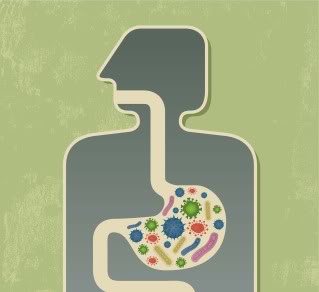
www.marksdailyapple.comResearch shows the “gut” does more than just process food and fluids.  We have zillions of microorganisms living and thriving in our bodies which help defend against infections. To make sure your immune system can cope with the stresses of everyday life you need a healthy level of probiotics and prebiotics in your body.

After the age of 2, your gut flora becomes static. The bacteria that has been living within you from birth is now part of your genetic make-up and cannot be changed. There are over 10,000 unique species of good bacteria in our digestive system. Each of us has a unique number of bacteria that are as distinctive as a fingerprint.

What is a probiotic – The World Health Organization defines probiotics as “live microorganisms, which, when administered in adequate amounts, confer a health benefit on the host.”

Probiotics are found in fermented foods such as yogurts (with live, active cultures), sauerkraut, and pickles. Fermentation is the process of adding yeast to a food to change its structure, by breaking down sugars and starches.

Foods containing high amounts of probiotic include:

  • Yogurt (with live cultures)
  • Kimchi (a spicy fermented cabbage)
  • Dark chocolate
  • Pickles
  • Some soft cheeses (such as Gouda)
  • Sourdough bread
  • Fruits such as bananas and tomatoes
  • Vegetables like artichokes, green beans, leeks
  • Whole-grain breads
  • Honey

Most probiotics are destroyed by our stomach acid. Only a fraction, about 1% makes it to the intestines to grow. So a good rule of thumb is to choose a probiotic with the largest number of different organisms and the largest number of total organisms (bacteria or CFUs, probiotics are measured in CFU’s – colony forming units)

  • 10 different organisms, 40 Billion CFU
  • 10 different organisms, 200 Billion CFU
  • 8 different organisms, 450 billion bacteria
  • 8 different organisms, 900 billion bacteria

One of the most popular ways to introduce probiotics to your diet is by eating yogurt. It’s the live bacteria in the food you eat that make it full of healthy probiotics. Since heat destroys the bacteria, make sure the label on the yogurt says live or active cultures. Most yogurts are pasteurized, which kills the bacteria. Those yogurts with live cultures add them back in after the pasteurization process.

What is a prebiotic – Prebiotics are “the food” for probiotics. Taking prebiotics helps probiotics work more efficiently and stimulate the growth of bacteria. Prebiotics are found in fruits, vegetables, such as garlic, leeks, onions, and bananas.

How are these bacteria identified? The genus is the first word in a bacterium’s name; it’s the large group to which the bacteria belongs. The species is the type of individual bacteria. Some bacteria have several strains, or differentiations of the species, and this is identified by the last part of the name. Here are a couple examples of common bacteria:

  • Lactobacillus bulgaricus can be found in many yogurts and soft cheeses. It helps to convert lactose and other sugars into lactic acid.
  • Streptococcus thermophilus is a friendly bacteria are also used to make yogurts and cheeses.
  • Lactobacillus acidophilus helps convert lactose into lactic acid
  • Bifidobacteria is a family of bacteria that help prevent and treat various gastrointestinal disorders and infections.

Our health depends on factors such as what we eat and drink, how much stress is in our daily lives, and how much activity and exercise we get; taking prebiotics and probiotics will help keep our intestines healthy and help maintain our immune system.

March 14, 2016/1 Comment/by Carmen Scott
0 0 Carmen Scott https://www.diversifiedhealth.ca/wp-content/uploads/2026/01/DiversifiedHealth-logo.png Carmen Scott2016-03-14 11:16:032016-03-14 11:16:03Prebiotics and Probiotics
Chiropractic Care

New Treatment Uses Electricity To Ease Pain

etoims10Written by: Art Carey, for The Inquirer

Crawford Hill is a mountaineer and rock climber who enjoys outdoor exercise. For the last three years, pain in his lower back has curtailed such pleasures. In fact, when he walks on level ground, he must stop and stretch every quarter-mile, and when he walks uphill, the pain brings him to a halt.

Seeking relief, Hill had back surgery last year and has tried stretching, physical therapy, epidurals, chiropractic, acupuncture, Feldenkrais, and cranial-sacral bodywork.  All to no avail.

Then his wife brought home a flier about a new treatment that uses electricity to reduce pain and awaken dormant muscles and nerves.

The technique is called eToims, which stands for electrical twitch-obtaining intramuscular stimulation (the T is capitalized because the “twitch” is the heart of the method). It is the brainchild of Jennifer Chu, a retired University of Pennsylvania physical medicine and rehabilitation specialist and former director of the electro-diagnostic lab. She is now an emeritus associate professor in physical medicine and rehabilitation at Penn.

During her 31 years at Penn, Chu, 66, a physician as well as a professor, was always seeking ways to improve the diagnosis and care of patients suffering from neuromuscular pain. When she gave electromyography or EMG diagnostic tests, some patients experienced pain relief when she inadvertently hit acupuncture meridian points. So Chu studied and became licensed in acupuncture, but eventually became frustrated by hit-or-miss results that couldn’t be explained scientifically.

In 1990, Chu learned from a Canadian pain specialist that she could obtain superior results by aiming needles at tender muscles rather than acupuncture meridian points. She began using thicker EMG needles to probe those tender spots, and when manipulation of the needles caused her to develop repetitive stress injury, she invented, in 1995, a gun with an oscillating needle that made the method more efficient.

With the gun, which penetrates muscle with a needle three times in two seconds, she noticed that when she hit the right spot, the muscle twitched, and twitching led to pain relief. The problem with this mechanical technique was that it was uncomfortable, and achieving pain relief required plenty of luck as well as extensive knowledge of anatomy.

Chu kept experimenting. “To treat neuromuscular pain with mechanical stimulation is not sufficient,” she realized. “You need electrical stimulation because that’s how the nervous system works.”

Twitch or trigger points are at nerve and muscle meeting points. The “points” are “a zone of neuromuscular junctions called motor endplates,” Chu says, “and one has to find the spot within the zone that will twitch the best.”

Chu realized that surface electrical current could also be used to stimulate nerve-muscle junctions. But the conventional nerve-stimulation probe, whose electrodes are only 1 1/4 inches apart, deliver an electrical current that is too focused and often painful.

More experimentation led to the invention of the eToims stimulator and probe. Its electrodes are six inches apart, and the broad tips, two inches in diameter, are covered with a special fabric that absorbs water for conductivity. The treatment is noninvasive and painless, Chu says, and can provide pain relief for a broad range of ailments, from aching necks and tension headaches to tennis elbows and herniated discs.

The stimulation technology is patented, and Chu has published two papers about it in peer-reviewed journals. It differs from other electrical-stimulation methods such as TENS, which reaches only shallow muscles and blocks signals to the brain, Chu says; eToims can target individual muscles or groups of muscles, deep or shallow, with adjustable electrical current, from one to five seconds, facilitating regeneration of injured nerves and muscles, Chu says, by contracting, elongating, and opening the muscles.

Stanley Schwartz, 67, an emeritus Penn associate professor of medicine, sought eToims treatment after a red-eye flight last year that caused much neck, shoulder, and high back pain. After about 20 treatments, he experienced improvement, both immediately and over time. He suggests the electrical stimulation may “release endorphins in the nerve roots or spinal fluid.” Schwartz, who has a private practice in Ardmore, recommends eToims to his diabetes patients as well as to patients who complain of musculoskeletal pain.

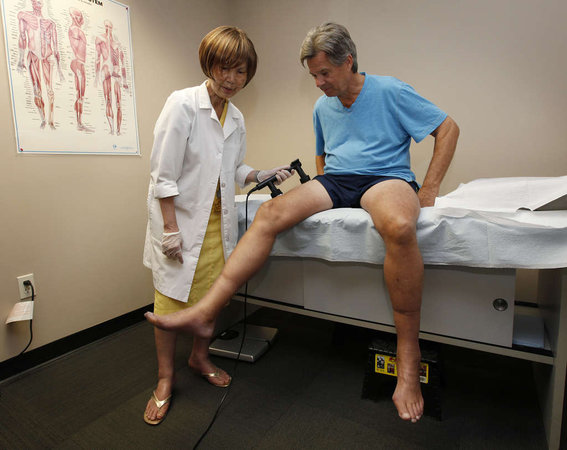
The other day, I watched as Chu treated Hill, 62, a former Episcopal Academy biology teacher and wrestling coach who now runs an adventure travel business. As he lay on a therapy table, she applied the probe to his quadriceps muscles, and later to his gluteal muscles and hamstrings. When she moved the probe over certain spots, his muscles began twitching and contracting like a freshly caught mackerel jumping and flipping on the bottom of a rowboat.

“Nirvana” is how Hill described the feeling, “phenomenally pleasurable.”

Hill’s back problem, Chu said, stems from major muscles in the region that are tight, knotted, spasmodic, and hence ischemic – lacking blood flow. As a result, they are “asleep” and “frozen,” forcing Hill’s lower back to compensate when he walks and moves.

After more than a dozen sessions with Chu at her Ardmore treatment center he has more flexibility and can walk more comfortably, he says.

“Back pain doesn’t have to be a part of aging,” Hill says. “It’s a work in progress, but in measurable ways that it hasn’t been before.”

For more information visit: www.etoims.com.
March 3, 2016/by Carmen Scott
0 0 Carmen Scott https://www.diversifiedhealth.ca/wp-content/uploads/2026/01/DiversifiedHealth-logo.png Carmen Scott2016-03-03 09:46:182016-03-03 09:46:18New Treatment Uses Electricity To Ease Pain

Search our Blog

Search Search

Topics of Interest

Acupuncture Back Pain Chronic Back Pain Chronic Pain Custom Orthotics Diversified Health Clinic Victoria BC Dry Needling eToims exercise fitness Foot pain GoodLife Fitness Victoria Marathon Headaches Health Care Victoria Health Tips Healthy lifestyle Immune System IMS Inflammation Joint Pain Knee Injuries Low Back Pain Marathons Migraines natural health practitioner orthotics Pain management Pain Relief Physiotherapy physiotherapy victoria bc Plantar fasciitis Registered Massage Therapist Registered Massage Therapy Runner's knee Running Seasonal Allergies Skin Cancer Spinal Decompression Sports Injuries Stress Stretches Sunscreen Victoria therapeutic massage Vitamins walking

Categories

  • Acupuncture
  • Athletic Therapy
  • Careers
  • Chiropractic Care
  • Events
  • Exercise Library
  • Fitness
  • Guest Bloggers/Articles
  • Health Information
  • Massage Therapy
  • News
  • Orthotics
  • Physiotherapy
  • Practitioners in Focus
  • Uncategorized
  • Victoria Healthcare News
  • Video Library

Archive

News & Events

  • About Matthew Bryan, DC November 7, 2025
  • The Benefits of Shockwave Therapy Treatments February 28, 2023
  • Piriformis Syndrome: A Real Pain in the Butt January 31, 2023
  • Searching for a Personal Trainer in Victoria to Help You Achieve Your Goals? December 31, 2022
  • Are Winter Blues + Holiday Stress Making You Feel Grinchy?  November 28, 2022
  • Fact or Fiction? Is Joint Pain Worse in Cold Weather? October 28, 2022
  • Pelvic Health During Pregnancy and Postpartum Workshop September 26, 2022

patients choice winner

A Victoria, BC Chiropractor winner of the Patients’ Choice Awards.Verified by Opencare.com

Diversified Health Clinic

The Mosaic Building
1063 Fort St, Victoria, BC
V8V 3K5, Canada
250-382-0018
Monday7 a.m. – 7 p.m.
Tuesday7 a.m. – 7 p.m.
Wednesday7 a.m. – 7 p.m.
Thursday7 a.m. – 7 p.m.
Friday7 a.m. – 7 p.m.
Saturday9 a.m. – 4 p.m.
SundayBy Appointment
© Copyright - Diversified Health Clinic. Website by Victoria's iDreamDigital.
  • Link to Facebook
  • Link to Instagram
  • Link to X
  • Link to Youtube
  • Link to Rss this site
  • Link to Mail
Scroll to top Scroll to top Scroll to top

Would you like to learn more about our COVID-19 Protocols?

Our ProtocolsDismiss

Cookie and Privacy Settings


How we use cookies

We may request cookies to be set on your device. We use cookies to let us know when you visit our websites, how you interact with us, to enrich your user experience, and to customize your relationship with our website.

Click on the different category headings to find out more. You can also change some of your preferences. Note that blocking some types of cookies may impact your experience on our websites and the services we are able to offer.

Essential Website Cookies

These cookies are strictly necessary to provide you with services available through our website and to use some of its features.

Because these cookies are strictly necessary to deliver the website, refusing them will have impact how our site functions. You always can block or delete cookies by changing your browser settings and force blocking all cookies on this website. But this will always prompt you to accept/refuse cookies when revisiting our site.

We fully respect if you want to refuse cookies but to avoid asking you again and again kindly allow us to store a cookie for that. You are free to opt out any time or opt in for other cookies to get a better experience. If you refuse cookies we will remove all set cookies in our domain.

We provide you with a list of stored cookies on your computer in our domain so you can check what we stored. Due to security reasons we are not able to show or modify cookies from other domains. You can check these in your browser security settings.

Google Analytics Cookies

These cookies collect information that is used either in aggregate form to help us understand how our website is being used or how effective our marketing campaigns are, or to help us customize our website and application for you in order to enhance your experience.

If you do not want that we track your visit to our site you can disable tracking in your browser here:

Other external services

We also use different external services like Google Webfonts, Google Maps, and external Video providers. Since these providers may collect personal data like your IP address we allow you to block them here. Please be aware that this might heavily reduce the functionality and appearance of our site. Changes will take effect once you reload the page.

Google Webfont Settings:

Google Map Settings:

Google reCaptcha Settings:

Vimeo and Youtube video embeds:

Other cookies

The following cookies are also needed - You can choose if you want to allow them:

Privacy Policy

You can read about our cookies and privacy settings in detail on our Privacy Policy Page.

Privacy Policy
Accept settingsHide notification only