Injury Recovery in Greater Victoria, BC - Call us to book an appointment: (250) 382-0018
Diversified Health Clinic
  • Welcome
  • Meet our Team
    • Chiropractic
      • Dr. Matthew Bryan DC
      • Dr. Tessa Bryan DC
      • Dr. Krisjan Gustavson DC
      • Dr. Alexia Grelson DC
    • Physiotherapy
      • Spirit Donahue MPT
      • Kanu Priya MPT
      • Ivy Elling-Quaintance MPT
    • Registered Massage Therapy
      • Morag Hart RMT
      • Craig Lawrence RMT
      • McKenzie Connell RMT
      • Braedan Pearce RMT
    • Acupuncture
      • Annie Wang R.Ac R.TCM.P
      • Lauren Ching R.Ac
      • Rebecca Thompson R.Ac R.TCM.P
      • Jun Liu R.Ac
    • Kinesiology / Personal Training
      • Angelina Schaaf BCAK
      • Christian Schwarz BCAK
    • Medical Doctor
      • Dr. Ian Hyams MD
      • Jennifer Blum, EMSELLA
    • Clinical Counsellor
      • Laura Grohovac CCC
    • .
  • About
    • Our Clinic
    • Careers
  • Disciplines
    • Disciplines
      • Chiropractic
      • Physiotherapy
      • Registered Massage Therapy
      • Kinesiology
      • Acupuncture
      • Clinical Counselling
      • Medical Doctor
      • Personal Training
    • Treatments
      • Shockwave Therapy
      • Spinal Decompression
      • IMS (Intramuscular Stimulation)
      • Pelvic Floor Physiotherapy
      • EMSELLA
      • Class IV K Laser Therapy
      • Orthotics
      • eToims Needle-less IMS
  • Conditions
    • Plantar Fasciitis
    • Running Injuries
    • Allergies
    • Concussion Treatment
    • Bursitis
    • Tennis Elbow
    • TMJ Disorder
    • Automobile Collisions
    • Nerve Pain with Sciatica
    • Sport Injuries
    • Stress
    • Runner’s Knee
    • Vertigo & Vestibular Rehab
    • Concussions
  • Pricing
  • News & Events
    • News
    • Events
    • Practitioners In Focus
    • Exercise Library
  • Contact
  • ICBC Claims
  • Book Now!
  • News
  • Menu Menu
  • Link to Facebook
  • Link to Instagram
  • Link to X
  • Link to Youtube
  • Link to Rss this site
  • Link to Mail
  • Welcome
  • About
    • Meet our Team
    • Our Clinic
    • Careers
  • Disciplines
  • Conditions
  • Pricing
  • News
    • News & Advice
    • Practitioners In Focus
  • Contact
  • ICBC Claims
  • Book Now!
Health Information

The Myth of Multi-Tasking

Multi-tasking is the often over-used term for the supposed secret to being your most productive. Whether at work, home or at leisure, the concept that you can get more accomplished by doing more things at once has taken over in recent years. Touted for years as the best way to increase productivity, research is now showing the opposite is true in most cases.

The fact is that splitting your attention on numerous tasks instead of focusing on one singular undertaking doesn’t usually equate with accomplishing those numerous tasks either more quickly or with better quality. For most of us, our brains are better able to problem solve and apply necessary skills for a task if it is uninterrupted. Imagine if a surgeon decided that while the nurse was suctioning the area he would just pop onto his website and update a link or two? That sounds outrageous – and that is an extreme comparison – but you get the idea. It takes focus away from one task and puts in on another. More time is then needed to re-acquaint your brain with the first task when you return to it. That is time lost and, essentially, wasted. A better term to use for this practice is switch-tasking as it more accurately describes what our brains have to do.

Here is one example that you can do yourself to see this in action. Do this with a timer to see the results. One a piece of paper, in a straight line, write the numbers 1 to 25, in order. Below that line, write the alphabet, in order. Check your time. Most people will do this in 35-45 seconds.

Now, try those same tasks but do them at the same time: write the number “1”, and then write “A”, then “2”, then “B” and so on, until you have completed. Time yourself and see the difference. This is a simple way to see just how much having to flip your focus affects your results. The same thing happens when you are trying to do the next monthly budget for work and schedule staff vacation dates at the same time. Or trying to make dinner and have a conversation via text. It all may get done, but at what cost? Efficiency and quality are what we are all striving for so shouldn’t we find the best way to achieve it?

Start by taking an honest look at where you currently use the practice of multi-tasking. Most of us do it unconsciously; we don’t even realize how often we switch between the items that need our attention. Before you try to change your behaviours, take the time to track your daily tasks at work and home. Old fashioned pen and paper is easy as you can just jot down what you are doing as you are doing it. Review it and you will be surprised at how much you jump from task to task during a day. Next, make small changes. If you have a job that has numerous “small” tasks each day as part of your workload, make a list as soon as you get to work. Prioritize, divide and conquer! Do one thing at a time – and don’t move to the next task until you are completely done the first one.
The same re-organization of action works in the home. How many of us start folding laundry, go to put something away and decide to go through the sweaters while we’re there, then realize that we should organize the tax files in the box next to the dresser while we do THAT. Only to walk into the laundry room hours later to clothes that still aren’t folded? Make a list and stick to it. When you put away the article of clothes and think you should tackle the sweaters, don’t! Go back to the laundry, making a quick stop to add the sweater tackling to your list so you can do it – later – when you are done the laundry. It’s a simple change but an effective one.

Take the time to stop multi-(non)tasking and give the option of “divide and conquer” your tasks a try. You might be surprised at how much more efficient you are by doing less instead of more at the same time.

October 5, 2017/by Diversified Health Clinic
https://www.diversifiedhealth.ca/wp-content/uploads/2026/01/DiversifiedHealth-logo.png 0 0 Diversified Health Clinic https://www.diversifiedhealth.ca/wp-content/uploads/2026/01/DiversifiedHealth-logo.png Diversified Health Clinic2017-10-05 09:00:292017-10-05 09:00:29The Myth of Multi-Tasking
Acupuncture

New Acupuncturist at Diversified Health!

SARA BJORKQUIST M.A., R.AC Acupuncturist

We would like to welcome acupuncturist Sara Bjorkquist to the Diversified Health Clinic team!

With our acupuncturist Erica Fynn, off on leave to enjoy the new addition to her family, we are thrilled to have Sara joining our team at Diversified Health.

As a health care professional, Sara is a Registered Acupuncturist with the BC College of Traditional Chinese Medicine Practitioners and Acupuncturists. She holds Bachelor’s and Master’s degrees from Ontario universities, and a Diploma in Acupuncture and Traditional Chinese Medicine from Pacific Rim College in British Columbia.

Originally from Ontario, Sara spent a decade living overseas and working in the health policy field, and now enjoys being settled in Victoria.

acupuncturist
Sara works on a broad range of conditions, including: acute and chronic injuries and pain; stress, anxiety, and depression; chronic fatigue; digestive issues; sleep disturbances; and fertility and gynecological problems. In addition to acupuncture, she often incorporates fire cupping, tui na (traditional Chinese massage), and nutritional therapy into her treatments.

Acupuncturist in Victoria at Diversified Health Clinic

Sara is available for appointments at Diversified Health Clinic on Mondays, Wednesdays, Fridays and Saturdays. Give us a call at 250-382-0018 or email at info@diversifiedhealth.ca to book now.

Learn more about how an acupuncturist can be a part of your wellness plan.

October 3, 2017/by Diversified Health Clinic
https://www.diversifiedhealth.ca/wp-content/uploads/2019/10/SARA-BJORKQUIST-M.A.-R.AC-Acupuncturist.jpg 760 570 Diversified Health Clinic https://www.diversifiedhealth.ca/wp-content/uploads/2026/01/DiversifiedHealth-logo.png Diversified Health Clinic2017-10-03 14:15:312020-03-03 00:19:08New Acupuncturist at Diversified Health!
Video Library

Video Series on Improving Your Posture: Video #3

Welcome to Straighten Up Canada, a simple three-minute program designed to help you achieve better posture.

This program is designed to promote a healthy spine through better posture and is intended for healthy adults. If you experience difficulty performing any of these exercises, please stop and consult a chiropractor or other healthcare professional.

As you Straighten Up, here are a few tips to remember:

Calm your mind and put distracting thoughts aside.
Straighten up by standing tall, feet together and arms by your sides.
Remember to breathe calmly, deeply and slowly.
Move slowly and smoothly. Movements should not be jerky.

This video series can be found on the Canadian Chiropractic Association Website.

September 11, 2017/by Diversified Health Clinic
0 0 Diversified Health Clinic https://www.diversifiedhealth.ca/wp-content/uploads/2026/01/DiversifiedHealth-logo.png Diversified Health Clinic2017-09-11 08:44:002017-09-11 08:44:00Video Series on Improving Your Posture: Video #3
Health Information, Physiotherapy

Improving Your Golf Swing: The Basics

Many golfers find the toughest thing about golf is maintaining and perfecting a consistent swing.  Below are a few key tips to head you in the right direction.

Golf Basics:

Holding the club – Grip the club in your fingers and not in the palm of your hands with a firm grip. There are three common types of grips; the interlocking, the overlapping and the baseball grip. Find the one that works best for you.

Positioning – Your feet, hips and shoulders should be parallel to the golf ball and square to the target. The left shoulder needs to face the target, and the left foot should be directly under the left shoulder. Create a stance which is wide, solid, stable and balanced.

Square to the target – This popular golf term means facing the right direction when you are getting ready to swing the club. Your shoulders should point at the target, and your feet should line up squarely under your shoulders.

Keep your eyes on the ball – Keeping your eyes on the ball will ensure that you keep your head down during a swing. If you lift your head when swinging, you will lift your shoulders and either slice the ball or miss the ball completely.

Backswing – Begin the backswing with your hands, arms and shoulders moving together as you rotate your hips. Halfway through the back swing the club should be square to the target and your hips should be rotated half as much as your shoulders. Focus on great posture by tilting at your hips and not at your waist.

Downswing – Keep the same position on the downswing, as you used on the back swing, making sure that the club face is squarely set to hit the ball.  The lower body starts the movement first, while the upper body follows. Lead with your lower body on your downswing, with your knee and hip rotating your body into alignment for the downswing.  At impact, your left hip will continue rotation for the follow through.

The goal is to build a smooth, consistent and relaxed swing, to create a swing that works best for you.

September 7, 2017/by Carmen Scott
0 0 Carmen Scott https://www.diversifiedhealth.ca/wp-content/uploads/2026/01/DiversifiedHealth-logo.png Carmen Scott2017-09-07 09:42:032017-09-07 09:42:03Improving Your Golf Swing: The Basics
Video Library

Video Series on Improving Your Posture: Video #2

Welcome to Straighten Up Canada, a simple three-minute program designed to help you achieve better posture.

This program is designed to promote a healthy spine through better posture and is intended for healthy adults. If you experience difficulty performing any of these exercises, please stop and consult a chiropractor or other healthcare professional.

As you Straighten Up, here are a few tips to remember:

Calm your mind and put distracting thoughts aside.
Straighten up by standing tall, feet together and arms by your sides.
Remember to breathe calmly, deeply and slowly.
Move slowly and smoothly. Movements should not be jerky.

This video series can be found on the Canadian Chiropractic Association Website.

September 4, 2017/by Diversified Health Clinic
0 0 Diversified Health Clinic https://www.diversifiedhealth.ca/wp-content/uploads/2026/01/DiversifiedHealth-logo.png Diversified Health Clinic2017-09-04 09:57:102017-09-04 09:57:10Video Series on Improving Your Posture: Video #2
Chiropractic Care, Physiotherapy

Golf Stretching Exercises

A golf stretching program will help to increase your range of motion and reduce the risk of an injury.

Before beginning any exercises program, make sure that you spend 5 to 10 minutes warming up, and keep in mind that stretching involves slow steady movements; holding each stretch for 15 to 20 seconds: remembering to breathe throughout the stretch.

Here are 7 stretches to improve your range of motion:

Shoulder & Chest Stretch

Standing with your feet hip-width apart, clasp your hands behind your back with straight arms, and raise your arms up as high as possible, bending forward from the waist and hold.

Shoulder Stretch

Place one arm straight across the chest, and place the opposite hand on the elbow and pull the arm towards your chest and hold. Repeat on the other side.

Triceps Stretch

Standing in a relaxed position with your back straight, raise your left arm straight overhead, bending your elbow so that your left hand is on the middle of your upper back with your elbow pointing up to the sky. Place your other hand on elbow and gently pull towards your head until you feel a stretch in your left triceps Hold and repeat with your other arm.

Low Back Stretch

Lie on your back with your one knee drawn up towards your chest. Then slowly bring that bent leg across the body until a stretch is felt in the lower back and hip area; keeping your shoulders squarely on the floor at all times. Your other leg should be bent so that your knees are aligned.

Hamstring Stretch

Sitting in an upright position, tuck your foot near your groin with the opposite leg out straight. Then bending from the hips and keeping your low back straight, reach down until a stretch is felt in the back of the thigh.

Standing Quad Stretch

Standing with your feet hip-width apart, pull your abdominal muscles in, relax your shoulders, and hold onto a chair or to the wall for balance. Then bend your left leg, bringing your heel behind you (toward your butt), and grasp your left foot with your right hand. Pull your foot up until you feel a stretch on the front of your thigh. Switch legs and repeat the stretch.

Wrist Stretch

Standing with your right arm extended straight out, pull back your fingers with the opposite hand until you feel a stretch in your forearm.  Hold and repeat with your other arm.

Remember to stop the stretch immediately if you feel any pain or if tightness increases as you stretch, and talk to your healthcare practitioner.

August 30, 2017/by Carmen Scott
0 0 Carmen Scott https://www.diversifiedhealth.ca/wp-content/uploads/2026/01/DiversifiedHealth-logo.png Carmen Scott2017-08-30 11:41:092017-08-30 11:41:09Golf Stretching Exercises
Video Library

Video Series on Improving Your Posture: Video #1

Welcome to Straighten Up Canada, a simple three-minute program designed to help you achieve better posture.

This program is designed to promote a healthy spine through better posture and is intended for healthy adults. If you experience difficulty performing any of these exercises, please stop and consult a chiropractor or other healthcare professional.

As you Straighten Up, here are a few tips to remember:

  1. Calm your mind and put distracting thoughts aside.
  2. Straighten up by standing tall, feet together and arms by your sides.
  3. Remember to breathe calmly, deeply and slowly.
  4. Move slowly and smoothly. Movements should not be jerky.

This video series can be found on the Canadian Chiropractic Association Website.

August 28, 2017/by Diversified Health Clinic
0 0 Diversified Health Clinic https://www.diversifiedhealth.ca/wp-content/uploads/2026/01/DiversifiedHealth-logo.png Diversified Health Clinic2017-08-28 10:58:242017-08-28 10:58:24Video Series on Improving Your Posture: Video #1
Health Information, Orthotics

Shoe Insoles: Cushioned or Supportive

Orthotics Victoria BC

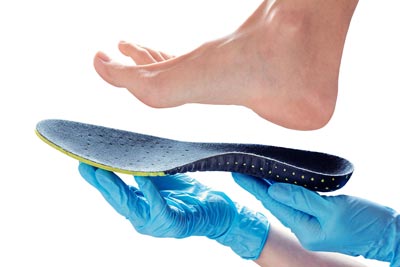
The first step when wearing orthotics (shoe insoles) starts when you shop for shoes. In order to take care of your feet, you need select a shoe, runner, or boot with a great fit and is specific to your chosen activity.

The next step is to determine if the insole (sock liner) that comes with your new shoe will be adequate for your gait, or if you need to replace it with a specific type of purchase a new insole.

What is a sock liner?

A sock liner is the removable orthotic or insole that sits between the foot and sole of most shoes. Though sock liners can vary in thickness and comfort, the primary function is to prevent the foot from rubbing against any stitching or materials that are used in the making of the shoe. Most sock liners that come in a new pair of shoes provide little support or cushioning.

There are two main types of shoe insoles:  cushioned – which will mold to our foot bed and supportive – which are functional.  In order to provide cushioning, the insole need to be flexible, and soft. In order to provide support, the  insole must be firm, and provide structure under the load of our body weight. (Materials can make a big impact on the size and weight of a support insole).

The need for additional support is the major reason to consider an insole. Most people need a more rigid arch support that can help hold the foot in an upright and stable position. Wearing a supportive insole can help control motion, relieve strain, and stabilize a foot that might have arch or heel pain.

Cushioned inserts are designed for people who want to reduce shock. Metatarsal pads for instance, are simply cushioned pads that fit behind the ball of your foot, distributing weight which  offloads and reduces pressure under the troublesome spot.

Foot conditions that can be helped by wearing an insole:

  • Achilles Tendonitis
  • Arch Pain
  • Bunions
  • Diabetic/Arthritic Foot
  • Flat Feet
  • Heel Spur
  • Over Pronation
  • Plantar Fasciltis
  • Shin Splints
  • Under Pronation

If your foot pain or discomfort continues or becomes worse , please talk to your healthcare practitioner to see if something more serious is going on.

August 24, 2017/by Carmen Scott
https://www.diversifiedhealth.ca/wp-content/uploads/2019/05/orthotics-victoria-bc.jpg 267 400 Carmen Scott https://www.diversifiedhealth.ca/wp-content/uploads/2026/01/DiversifiedHealth-logo.png Carmen Scott2017-08-24 10:19:282021-12-09 05:48:04Shoe Insoles: Cushioned or Supportive
Chiropractic Care, Health Information, Orthotics

Running Gait Analysis Can Help Get The Best Fit From Your Shoes

Running shoes are designed for different foot shapes; designed for different running patterns; and running on different terrain; so a running gait analysis can help get the best fit from your running shoes.

How you run and how often you run can make a big difference in the type of footwear that you buy.  There are eight basic types of runs.

  • A recovery run is a relatively short run performed at an easy pace.
  • A base run is a relatively short to moderate-length run undertaken at a runner’s natural pace.
  • A long run is a base run that lasts long enough to leave a runner fatigued. The function of a long run is to increase raw endurance.
  • A progression run is a run that begins at a runner’s natural pace and ends with a faster segment at the end of the run.
  • A fartlek workout is a base run that mixes in intervals of varying duration or distance.
  • Hill repeats are repeated short segments of fast uphill running.
  • A tempo run is a sustained effort at a threshold intensity, which is the fastest pace that can be sustained for a period of time.
  • Interval runs consist of repeated shorter segments of fast running separated by slow jogging or standing recoveries.

When buying running shoes: keep these tips in mind:

The time of day you shop is a factor.  Feet swell as you use them and that’s especially important to remember when buying running shoes.  Try them on at the end of the day so you have a better idea of how they’ll feel after a run.  Even then remember to leave about a finger width of space between the end of your longest toe and the end of the shoe – your feet can swell even more on a run , and you don’t want bruised toes and black toenails.

Remember to take your orthotics with you and make sure you try them out in the shoes before you purchase them. ( Remember, orthotics need to be replaced every two years)

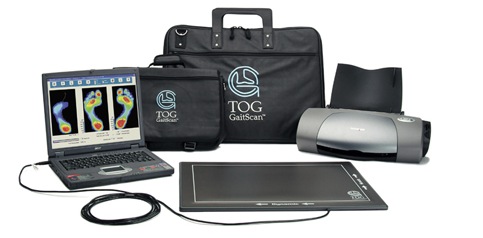
At Diversified Health our practitioners use a gait scan to help assess your foot concerns.  As you move across a pressure plate, thousands of tiny sensors capture the distribution of pressure of your foot and the computer displays 2D and 3D visual representations of the pressure under your foot.  These findings help the practitioners to evaluate your foot function.

Please contact the clinic if you have questions about what type of running shoes would be beneficial for your fitness level and remember that a running gait analysis can help get the best fit from your running shoes.

August 21, 2017/2 Comments/by Carmen Scott
0 0 Carmen Scott https://www.diversifiedhealth.ca/wp-content/uploads/2026/01/DiversifiedHealth-logo.png Carmen Scott2017-08-21 08:01:122021-12-09 05:48:15Running Gait Analysis Can Help Get The Best Fit From Your Shoes
Health Information

Walking or Running…Which is better for you?

Both walking, and running require energy to move our bodies over a given distance.  Walking can provide many of the same health benefits associated with running, however, running will produce the fastest physiological changes.

Which is better walking or running for fitness and health?

  • We need to walk more frequently and twice the distance in order to get the effects of running
  • Running is a constant challenge to the body and running burns about 2.5 times more calories than walking


The mechanics of walking and running

Joint impact, muscles, and type of stride used are different for walking than for running. The different strides engaged when running and walking affect the power efficiency, maximum speed and impact level.

Knee angle

Your knees are bent more during a running stride than they are during a walking stride. This increases the force exerted on the ground during running in comparison to the force exerted during walking.

Maximum speed

An average walking speed is about 5 kilometers per hour, verses an average running speed of 8.5 kilometers per hour.

Ground contact

The difference between running and walking strides is the length of time each foot is in contact with the ground. When walking, at least one of your feet will be in contact with the ground at any given time. When running, there is a period of time during each stride in which neither of your feet is in contact with the ground.

The impact to the body when running is much higher than walking; because the foot to surface impact ratio for running is three to four times your body weight compared to about one times your body weight for walking.

Energy

The different strides used for walking and running affect the energy used in executing each type of stride at different speeds.

Injury

One of the big differences between running and walking is there is a greater risk of injury in running. Running is considered a high impact exercise, because it can cause injury to the hips, knees and ankle joints. Walking is a low impact activity and is much less damaging to the joints.

Walking and running are low-cost, year-round activities; so whether you choose walking, or running, staying active is part of a healthy lifestyle. Both walking and running will help promote weight loss, improve your sleep, elevate your mood, improves circulation, improves muscle tone, boost your energy level, decrease blood pressure and cholesterol levels and decrease the risk heart disease.

August 14, 2017/by Carmen Scott
0 0 Carmen Scott https://www.diversifiedhealth.ca/wp-content/uploads/2026/01/DiversifiedHealth-logo.png Carmen Scott2017-08-14 11:50:362017-08-14 11:50:36Walking or Running…Which is better for you?
Page 9 of 49«‹7891011›»

Search our Blog

Search Search

Topics of Interest

Acupuncture Back Pain Chronic Back Pain Chronic Pain Custom Orthotics Diversified Health Clinic Victoria BC Dry Needling eToims exercise fitness Foot pain GoodLife Fitness Victoria Marathon Headaches Health Care Victoria Health Tips Healthy lifestyle Immune System IMS Inflammation Joint Pain Knee Injuries Low Back Pain Marathons Migraines natural health practitioner orthotics Pain management Pain Relief Physiotherapy physiotherapy victoria bc Plantar fasciitis Registered Massage Therapist Registered Massage Therapy Runner's knee Running Seasonal Allergies Skin Cancer Spinal Decompression Sports Injuries Stress Stretches Sunscreen Victoria therapeutic massage Vitamins walking

Categories

  • Acupuncture
  • Athletic Therapy
  • Careers
  • Chiropractic Care
  • Events
  • Exercise Library
  • Fitness
  • Guest Bloggers/Articles
  • Health Information
  • Massage Therapy
  • News
  • Orthotics
  • Physiotherapy
  • Practitioners in Focus
  • Uncategorized
  • Victoria Healthcare News
  • Video Library

Archive

News & Events

  • How to Heal Your Pelvic Floor After Giving Birth | Pelvic Floor Physiotherapy Guide July 30, 2026
  • About Matthew Bryan, DC November 7, 2025
  • The Benefits of Shockwave Therapy Treatments February 28, 2023
  • Piriformis Syndrome: A Real Pain in the Butt January 31, 2023
  • Searching for a Personal Trainer in Victoria to Help You Achieve Your Goals? December 31, 2022
  • Are Winter Blues + Holiday Stress Making You Feel Grinchy?  November 28, 2022
  • Fact or Fiction? Is Joint Pain Worse in Cold Weather? October 28, 2022

patients choice winner

A Victoria, BC Chiropractor winner of the Patients’ Choice Awards.Verified by Opencare.com

Diversified Health Clinic

The Mosaic Building
1063 Fort St, Victoria, BC
V8V 3K5, Canada
250-382-0018
Monday7 a.m. – 7 p.m.
Tuesday7 a.m. – 7 p.m.
Wednesday7 a.m. – 7 p.m.
Thursday7 a.m. – 7 p.m.
Friday7 a.m. – 7 p.m.
Saturday9 a.m. – 4 p.m.
SundayBy Appointment
© Copyright - Diversified Health Clinic. Website by Victoria's iDreamDigital.
  • Link to Facebook
  • Link to Instagram
  • Link to X
  • Link to Youtube
  • Link to Rss this site
  • Link to Mail
Scroll to top Scroll to top Scroll to top

Would you like to learn more about our COVID-19 Protocols?

Our ProtocolsDismiss

Cookie and Privacy Settings


How we use cookies

We may request cookies to be set on your device. We use cookies to let us know when you visit our websites, how you interact with us, to enrich your user experience, and to customize your relationship with our website.

Click on the different category headings to find out more. You can also change some of your preferences. Note that blocking some types of cookies may impact your experience on our websites and the services we are able to offer.

Essential Website Cookies

These cookies are strictly necessary to provide you with services available through our website and to use some of its features.

Because these cookies are strictly necessary to deliver the website, refusing them will have impact how our site functions. You always can block or delete cookies by changing your browser settings and force blocking all cookies on this website. But this will always prompt you to accept/refuse cookies when revisiting our site.

We fully respect if you want to refuse cookies but to avoid asking you again and again kindly allow us to store a cookie for that. You are free to opt out any time or opt in for other cookies to get a better experience. If you refuse cookies we will remove all set cookies in our domain.

We provide you with a list of stored cookies on your computer in our domain so you can check what we stored. Due to security reasons we are not able to show or modify cookies from other domains. You can check these in your browser security settings.

Google Analytics Cookies

These cookies collect information that is used either in aggregate form to help us understand how our website is being used or how effective our marketing campaigns are, or to help us customize our website and application for you in order to enhance your experience.

If you do not want that we track your visit to our site you can disable tracking in your browser here:

Other external services

We also use different external services like Google Webfonts, Google Maps, and external Video providers. Since these providers may collect personal data like your IP address we allow you to block them here. Please be aware that this might heavily reduce the functionality and appearance of our site. Changes will take effect once you reload the page.

Google Webfont Settings:

Google Map Settings:

Google reCaptcha Settings:

Vimeo and Youtube video embeds:

Other cookies

The following cookies are also needed - You can choose if you want to allow them:

Privacy Policy

You can read about our cookies and privacy settings in detail on our Privacy Policy Page.

Privacy Policy
Accept settingsHide notification only