 Our feet are subject to “abuse” on a daily basis. Foot pain can be due to ill-fitting footwear, injuries such as a sprain caused by a stretched or torn ligament, or a stress fractures of bones in the foot, which can result from accidents or overuse while engaging in sports or exercise.
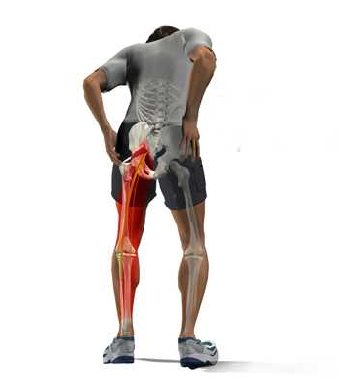
The obvious symptoms of foot trouble is pain. If you are limping, or avoiding placing weight on your heel or toes you need to find out why. Feet are extremely complex structures composed of bones, joints, ligaments, muscles, tendons, nerves, blood vessels, and skin. Even without pain, foot dysfunction can cause your entire body to overcompensate, which can lead to back and hip pain.
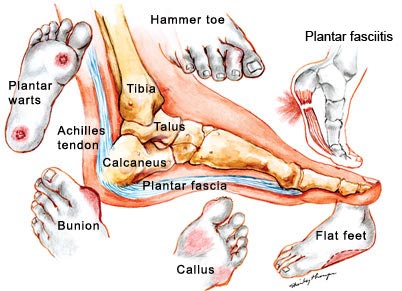
The problem with foot pain is that it can force you to modify the way you walk which creates significant stress on the joints of your legs, hips, and lower spine. A common foot problem is Pronation. If you pronate; some of the bones of the foot drop to a less stable position because the foot arch is too weak to keep them in proper alignment. The arches themselves may be unnaturally stretched which places stress on the entire foot – this is known as “flat feet”.
Another common problem — one that is often found along with pronation — is Plantar Fascitis. Plantar Fascitis is a stress irritation of the sheath of elastic tissues running nearly the entire length of the foot. If not treated, both conditions can lead to progressive development of foot malfunction and discomfort.
Chiropractic and Physiotherapy can help overcome foot and ankle problems. The practitioners can use a number of diagnostic tests and treatments, including examining your gait and foot function. They will palpate your feet and ankles to measure any limitations in range of motion to identify what is causing your pain, and determine the best course of treatment.
These treatments can consist of Shockwave Therapy, Class IV-Laser, eToims treatment, or orthotics. Our health care practitioners can provide lifestyle counseling/exercsies that can help reduce biological and psychological stresses on your body as a whole.

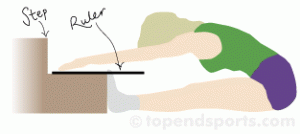 Remove your shoes and sit on the floor, legs extended in front of the body, toes pointing up and feet slightly apart, with the soles of the feet against the base of the step (if there is no step, any flat surface will work). Place the ruler on the ground between your legs or on the top of the step. Place one hand on top of the other, then reach slowly forward. At the point of your greatest reach, hold for a few seconds, and measure how far you have reached.
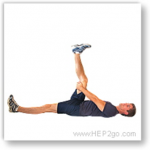 Lay flat on your back; bring up one leg at a time & hold onto the back of your thigh with one hand & the back of your calf with the other while using your hands to pull the leg towards you, keeping the knee bent. You will feel a strong stretch at the back of the middle of your thigh. If you can’t reach your leg use a towel around your legs to pull your leg towards you.
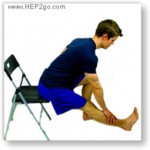 Sit on the edge of a chair with one leg bent and the other out in front of you. Lean forward keeping your back straight and your head up until you feel a stretch in the back of your thigh.


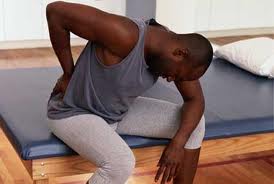 A healthy back is straight, moves easily and is free of pain. The most common area for chronic back